From 24 Shots and a Prayer to Infinite Pixels: How Photography Changed Everything
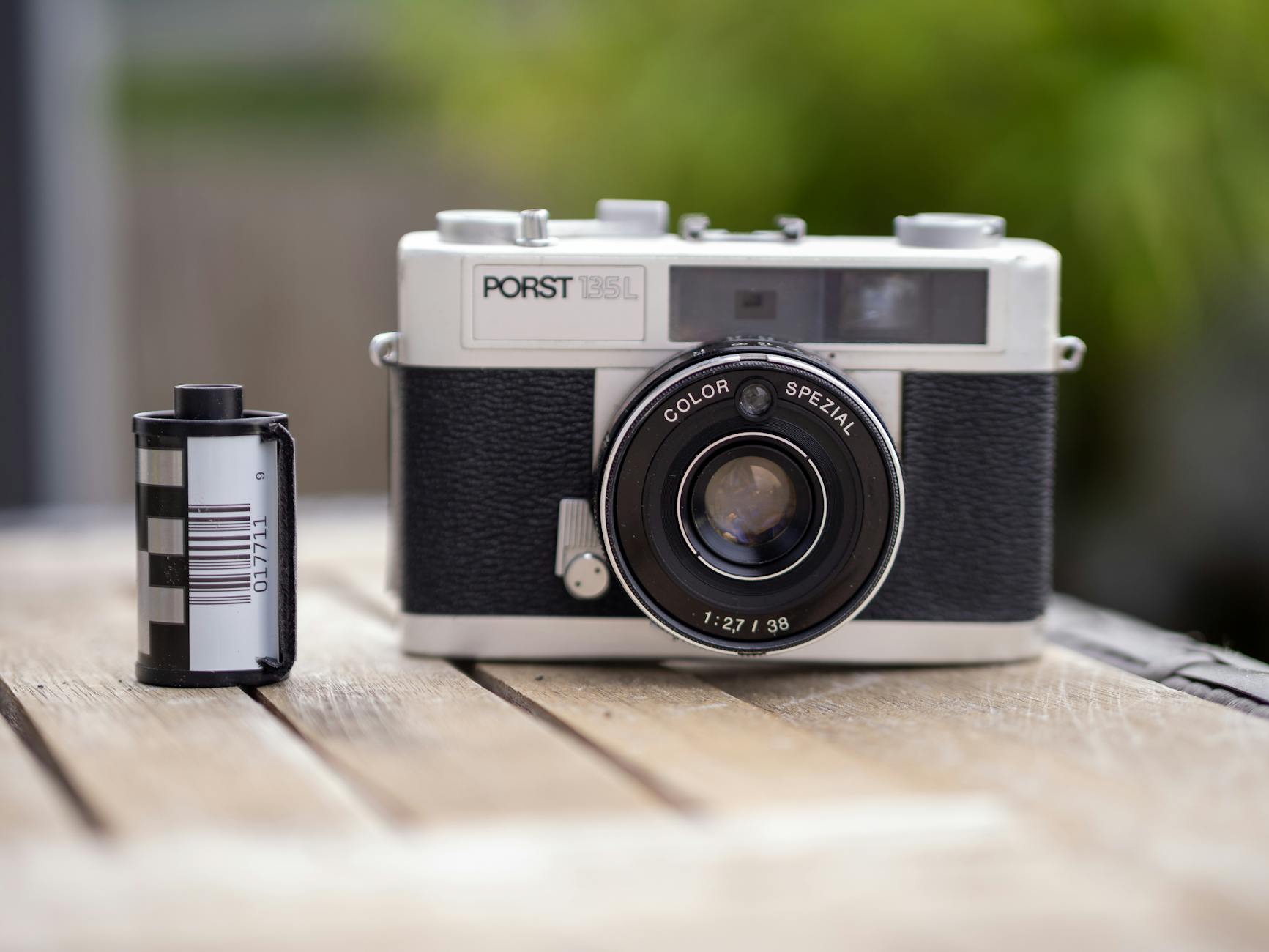
From 24 Shots and a Prayer to Infinite Pixels: How Photography Changed Everything
Picture this: it's 1988, you're at your cousin's birthday party, and you've got exactly six shots left on your disposable camera. The cake is coming out. Someone's about to blow the candles. You raise the camera, press the button — and pray the flash didn't wash everything out. You won't know for three days.
That was photography for most Americans until surprisingly recently. And if you grew up in the digital age, it's almost impossible to fully grasp how different — how deliberate, how expensive, how uncertain — the whole experience actually was.
The Real Cost of Capturing a Memory
Here's a number that tends to stop people cold: a standard 24-exposure roll of 35mm film, once you factor in the cost of the roll itself and the processing fees, would set you back the equivalent of roughly $25 to $35 in today's dollars. That works out to over a dollar per shot — before you even knew whether the photo was any good.
And the math got worse. Out of 24 exposures, maybe 18 would be usable. A few would be blurry. Someone would have their eyes closed. One would be mysteriously dark. You'd paid for all of them regardless.
This wasn't a niche problem for casual photographers. It was just the reality of the medium. Families on vacation would budget for film the way they budgeted for gas. Forgetting to pack enough rolls was a genuine crisis.
The One-Hour Photo Lab Was Actually Revolutionary
Before the 1980s, developing film typically meant dropping it off at a drugstore or camera shop and waiting anywhere from three days to a week. When Fotomat kiosks started appearing in parking lots across America in the 1970s — those tiny drive-through booths that promised next-day processing — it felt like the future had arrived.
Then came the one-hour photo lab, and people genuinely marveled at it. Malls across the country built entire mini-storefronts around the concept. You could drop off a roll at noon and pick up your prints by the time you finished lunch. It seemed almost magical.
Of course, "one hour" still meant one hour of not knowing. You'd hand over the canister, go about your day with a low hum of anticipation (or anxiety), and return to find out whether the vacation photos were keepers or catastrophes. There was no preview. No do-over. What was on that film was what you got.
The Shift That Changed Everything
The first consumer digital cameras arrived in the mid-1990s, but they were expensive, clunky, and produced images that looked like they'd been taken through a screen door. The real turning point came in the early 2000s when digital cameras became genuinely affordable — and then again in 2007, when the iPhone put a camera in everyone's pocket that only got better with every passing year.
The transformation was staggering in its speed. Within a decade, the entire film processing industry — an infrastructure that had supported thousands of labs, technicians, and specialty stores — had effectively collapsed. Kodak, once one of the most valuable companies in America, filed for bankruptcy in 2012.
Today, the average smartphone camera would have seemed like science fiction to someone shooting film in 1995. Night mode, portrait blur, optical zoom, burst shooting, AI scene detection — features that professional photographers would have paid thousands for are now standard on a device most people carry to check their email.
What We Gained — and What Quietly Disappeared
The gains are obvious and enormous. Photography is now genuinely democratic. You don't need money, equipment, or expertise to capture a meaningful moment. A kid in rural Kansas with a five-year-old Android phone can take a technically better photo than a professional could manage with mid-range film equipment in 1990. That's remarkable.
But there's something worth pausing on, even in the middle of all that progress.
When a photo cost a dollar and you only had 24 of them, you thought before you shot. You framed the image in your head. You waited for the right moment. And when the prints came back — when you finally held them in your hands — there was a weight to them. They'd been through something. So had you.
Now the average iPhone user has thousands of photos on their device, most of which they'll never look at again. We've traded scarcity for abundance, and that's almost always a good trade. But somewhere in the process, the ritual disappeared — the anticipation, the ceremony of picking up your prints, the way a slightly blurry, imperfectly lit photo of your grandmother at Christmas could still feel irreplaceable precisely because it was one of only a handful you had.
Maybe that's fine. Maybe nostalgia is just the brain's way of dressing up inconvenience in soft light.
But the next time your phone auto-generates a "memory" slideshow from photos you forgot you'd taken — scored with gentle music, perfectly edited — it's worth wondering whether something got a little too easy. And whether the waiting, as frustrating as it was, was part of the point.