Your Gym Used to Know Your Name. Now Your Phone Counts Your Steps.
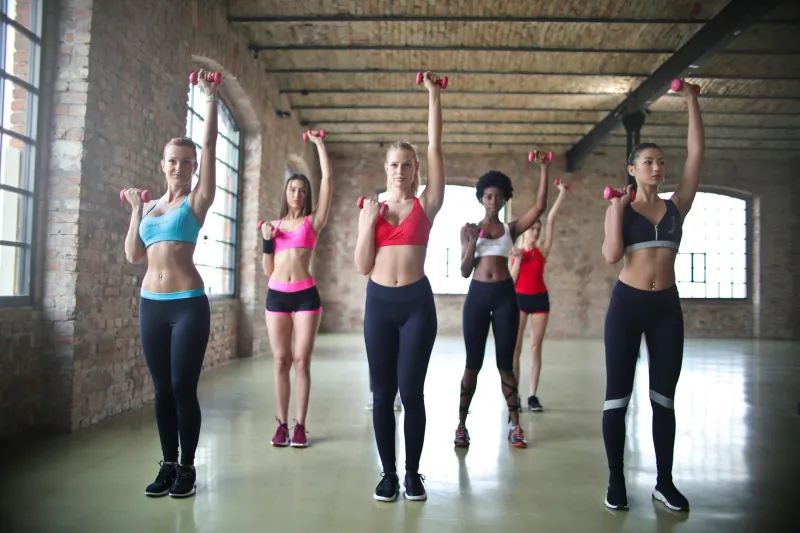
Walk into any American gym in 1985, and you'd be greeted by name. Not because of some high-tech facial recognition system, but because the same people showed up at the same times every week, and the staff actually knew their members. Fitness was a fundamentally social experience—you worked out alongside neighbors, made friends in aerobics classes, and got advice from trainers who watched you struggle and improve over months and years.
Today, millions of Americans get their fitness guidance from apps that know their heart rate, sleep patterns, and calorie burn, but have never seen them sweat. We've traded community for convenience, human coaches for AI algorithms, and group energy for private optimization.
The shift represents more than just technological progress—it's a complete reimagining of what fitness means and why we pursue it.
When Fitness Meant Showing Up Somewhere
In the pre-digital fitness era, working out required commitment to a place and time. You joined the local YMCA, community center, or neighborhood gym, and that became your fitness home. The same faces appeared in the same classes week after week. Instructors knew your limitations and pushed your boundaries. Fellow members became workout buddies and accountability partners.
The gym ecosystem was surprisingly personal. Front desk staff knew your schedule. Trainers remembered your goals. Even the guy who cleaned the equipment knew whether you'd been skipping leg day. This social fabric created natural motivation—it was harder to skip a workout when people would notice your absence.
Group fitness classes were the heart of most gyms. Aerobics, step classes, and water aerobics weren't just workouts—they were social events. People arrived early to claim their spots and stayed late to chat. Friendships formed over shared suffering through Jane Fonda videos and Richard Simmons routines.
The equipment itself fostered interaction. Without personal entertainment systems, people talked between sets. They spotted each other on bench presses and shared tips about form. The gym was a community space that happened to have weights and cardio equipment.
The First Digital Disruption
The transformation began subtly in the 1990s with personal entertainment systems. Treadmills got built-in TVs. Walkmans (and later iPods) allowed people to create private workout bubbles. Suddenly, you could exercise while completely ignoring everyone around you.
Fitness videos started the home workout revolution, but they still tried to replicate the group experience. Instructors spoke directly to the camera, creating the illusion of personal attention. The most popular videos featured multiple participants, maintaining the sense that fitness was something you did with others, even if those others were on your television screen.
Big box gyms accelerated the depersonalization. Chain facilities prioritized efficiency over community. Automated check-in systems replaced friendly front desk interactions. Corporate policies prevented staff from developing personal relationships with members. The neighborhood gym's intimate atmosphere gave way to warehouse-sized facilities where anonymity was the norm.
The App Revolution Changes Everything
The smartphone era didn't just digitize fitness—it completely relocated it. Suddenly, your personal trainer lived in your pocket, available 24/7 with unlimited patience and no judgment. Apps like Nike Training Club and MyFitnessPal offered personalized workout plans and nutrition tracking that adapted to your progress in real-time.
The COVID-19 pandemic accelerated the shift toward home fitness. Peloton transformed from a niche luxury to a household name. Mirror, Tonal, and other connected fitness devices brought the gym experience directly into living rooms. Virtual classes allowed people to work out with instructors from around the world without leaving their houses.
What emerged was a fitness ecosystem that was simultaneously more personal and less human. Apps knew intimate details about users' bodies and behaviors, but the guidance came from algorithms rather than experienced trainers who could read body language and adjust instruction on the fly.
The Science of Solitary Fitness
Modern fitness technology offers unprecedented insight into human performance. Wearable devices track heart rate variability, sleep quality, and recovery metrics that even professional athletes couldn't access twenty years ago. AI-powered apps can design workout programs that adapt daily based on performance data and life circumstances.
The precision is remarkable. Your phone knows exactly how many steps you took, stairs you climbed, and calories you burned. It can tell you whether you're overtraining or underperforming. Some apps even adjust workout intensity based on your stress levels and sleep quality.
This data-driven approach has made fitness more scientific and personalized than ever before. Users can optimize their workouts with a level of precision that would have required a team of sports scientists in previous decades.
What We Gained and Lost
The digitization of fitness brought undeniable benefits. Convenience is the biggest win—you can work out anytime, anywhere, without commuting to a gym or conforming to class schedules. Cost is another factor; many excellent fitness apps cost less per month than a single personal training session used to cost.
Accessibility improved dramatically. People who felt intimidated by traditional gyms found comfort in private home workouts. Those with mobility limitations gained access to adaptive programs. Rural residents could access the same quality instruction as city dwellers.
But something important was lost in translation. The social motivation that came from working out alongside others is hard to replicate through a screen. The immediate feedback from human trainers who could spot form problems or push through mental barriers gave way to generic encouragement from app notifications.
The community aspect of fitness largely disappeared. Group fitness classes created friendships and support networks that extended beyond the gym. People celebrated each other's milestones and provided encouragement during plateaus. That social fabric provided motivation that went deeper than personal achievement—it was about belonging to something larger.
The Hybrid Future
Some fitness companies are trying to bridge the digital-physical divide. Boutique studios offer app-connected classes that blend in-person instruction with digital tracking. Some gyms have adopted hybrid models where members can attend physical classes or stream the same workouts at home.
Social fitness apps attempt to recreate community online through virtual challenges, leaderboards, and social sharing features. But these digital connections often feel shallow compared to the relationships formed through shared physical struggle and face-to-face encouragement.
The most successful modern fitness approaches seem to combine the best of both worlds: the convenience and personalization of digital tools with the motivation and community of in-person experiences.
Why It Matters
The shift from social to solitary fitness reflects broader changes in American society. We've optimized for efficiency and personalization at the expense of community and human connection. While we've gained convenience and precision, we've lost some of the social bonds that made fitness sustainable for many people.
The data shows mixed results. Americans have more access to fitness information and tools than ever before, yet obesity rates continue rising. We can track our health metrics in real-time, but many people struggle with motivation and consistency.
Perhaps the lesson is that fitness, like many aspects of human experience, benefits from both technological enhancement and human connection. The future might not be choosing between the gym that knew your name and the app that counts your steps—it might be finding ways to have both.
The transformation of American fitness culture happened gradually, then all at once. One day we were doing jumping jacks in community center gymnasiums, and the next we were following AI-generated workout plans on our phones. The convenience is undeniable, but something tells us we might want to occasionally put down the device and work out alongside actual humans again.