Death Used to Be a Family Affair. Now It's a $20,000 Business Transaction.
When Grandma Died in the Back Bedroom
In 1850, when someone died in America, the family got busy. Not with phone calls to funeral directors or decisions about casket linings, but with soap, water, and whatever clean cloth they could find. Death happened at home, and so did everything that came after.
The deceased was washed and dressed by family members, usually the women. If you were lucky enough to own a family Bible, it got placed on the chest. Neighbors arrived with food and helped dig the grave, often right there on the family property. The local carpenter might build a simple pine box, or the family would cobble one together from whatever lumber they had on hand.
The whole process cost almost nothing beyond the price of wood and maybe some flowers from the garden. More importantly, it kept death intimate, immediate, and deeply personal.
How the Civil War Changed Everything
The American Civil War created an unexpected problem: how do you get a dead soldier from a battlefield in Virginia back to his family in Ohio? For the first time in American history, families needed professional help managing death.
Entrepreneurs stepped in with a new service called embalming. Using chemicals to preserve bodies for transport, these early morticians could ship the deceased hundreds of miles home for burial. What started as a wartime necessity gradually became a peacetime expectation.
By the 1880s, the first commercial funeral homes were opening in major cities. They offered families something they'd never had before: the option to outsource death. No more washing bodies in the kitchen. No more hammering together coffins in the barn. For a fee, professionals would handle everything.
The Rise of the Death Specialists
As America urbanized, home burial became impractical. City ordinances banned backyard graves, pushing families toward commercial cemeteries. Funeral directors, sensing opportunity, began offering "complete services" that included transportation, preparation, viewing, and burial arrangements.
The industry discovered that grief made people vulnerable to upselling. Elaborate caskets became symbols of love and respect. Embalming, once reserved for long-distance transport, became standard practice. Viewing rooms replaced the family parlor. What had once been a community effort became a commercial transaction.
By the 1920s, the funeral industry had professionalized completely. State licensing requirements kept amateurs out, while industry associations promoted "proper" funeral practices that happened to require expensive products and services.
The Modern Death Machine
Today's American funeral costs an average of $12,000, with premium services reaching $20,000 or more. That's more than many families have in their emergency savings accounts. The industry has consolidated into large corporations that own funeral homes, cemeteries, and crematoriums, creating vertical monopolies on death.
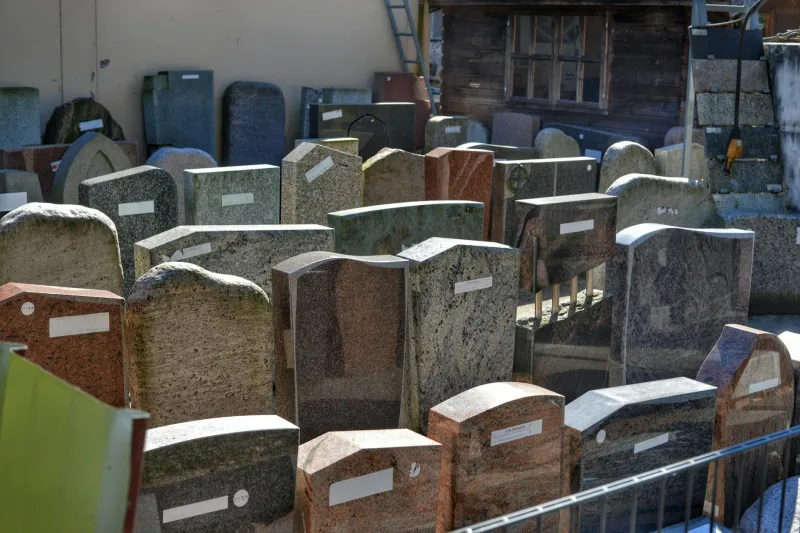
Modern funeral homes offer payment plans, life insurance policies, and pre-need contracts that lock families into purchasing decisions years before they're needed. The simple pine box has been replaced by caskets with names like "Eternal Rest" and "Peaceful Slumber," made from metals that promise to preserve the body indefinitely.
Embalming, which serves no public health purpose for immediate burial, is performed on roughly 80% of American bodies, adding hundreds of dollars to funeral costs. Concrete burial vaults, marketed as protecting the deceased, actually exist to prevent cemetery grounds from settling as caskets deteriorate.
What We Lost Along the Way
The professionalization of death solved real problems. Modern funeral homes provide expertise, facilities, and services that most families couldn't manage alone. They've also removed the immediate physical reality of death from most Americans' lives.
Our great-great-grandparents understood death as a natural process they could manage themselves. They saw bodies before and after death, participated in preparation rituals, and buried their loved ones with their own hands. Death was sad, but it wasn't mysterious or frightening in the way it often is today.
The medicalization and commercialization of death has also created distance between the living and the deceased. Instead of keeping vigil in the family home, we visit funeral parlors during designated hours. Instead of lowering caskets ourselves, we watch from a distance as professionals operate machinery.
The Quiet Revolution
A small but growing number of American families are reclaiming death practices their ancestors would recognize. Home funerals, legal in all 50 states, allow families to care for their own deceased without funeral home involvement. Natural burial grounds, which prohibit embalming and metal caskets, are opening across the country.
Green burial costs a fraction of traditional funerals and returns the body to the earth without chemicals or non-biodegradable materials. Some families are building their own caskets or using simple shrouds, just as their ancestors did.
These aren't necessarily better choices than traditional funerals, but they represent something the funeral industry largely eliminated: choice itself. For most of American history, families handled death according to their own values, traditions, and financial circumstances.
Following the Money
The funeral industry's transformation of death from family ritual to commercial service represents one of the most successful marketing campaigns in American history. They convinced generations of families that proper love for the deceased required professional services and expensive products.
This shift parallels changes in other areas of American life where community practices became commercial services. Just as we once grew our own food and now buy it from corporations, we once buried our own dead and now pay others to do it.
The difference is that death only happens once per person, making it impossible for families to develop expertise through practice. The funeral industry has used this vulnerability to create a market where emotional manipulation and information asymmetry drive purchasing decisions worth billions of dollars annually.
Whether the pendulum swings back toward family-centered death care remains to be seen. But for the first time in generations, Americans are questioning whether the most expensive goodbye is necessarily the most meaningful one.