The Living Room Used to Be the Dying Room. Here's How Death Got Moved to Hospitals — And Why It's Coming Back Home.
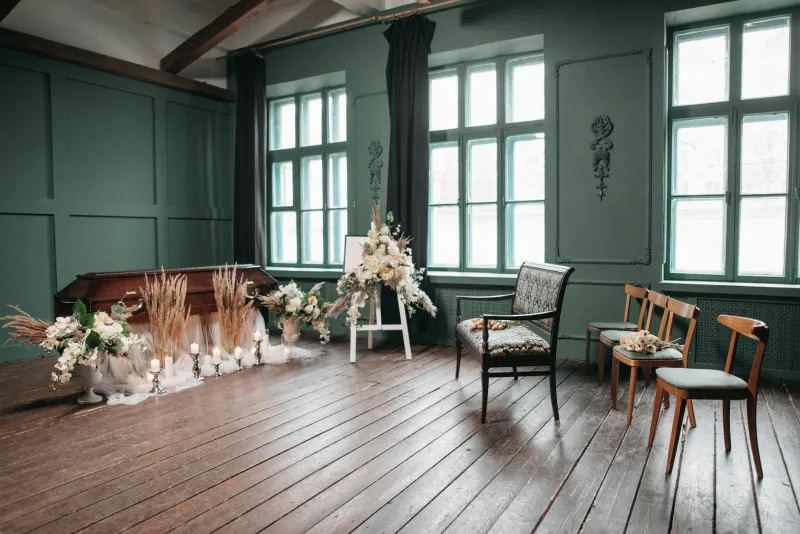
When Death Lived in Every Home
In 1900, nearly 90% of Americans died at home. Death wasn't hidden away in sterile corridors or behind medical equipment — it happened in the same rooms where families gathered for Sunday dinner, where children played, and where life's most important conversations took place.
Your great-great-grandmother likely witnessed multiple deaths in her childhood home. She probably helped prepare bodies for burial, sat vigil through final nights, and understood death as naturally as she understood birth. The parlor, that formal front room in Victorian homes, got its name from the French "parler" — to speak — because it's where families would lay out their deceased and receive mourners who came to pay respects.
Death was a community affair. Neighbors brought food, took turns sitting with the dying, and helped dig graves. Children weren't shielded from mortality — they were part of the process, learning that death was as much a part of life as anything else.
The Great Hospital Migration
By 1949, the numbers had completely flipped. Suddenly, 90% of Americans were dying in hospitals or nursing homes. What happened in those five decades fundamentally changed how we experience our final moments — and how we think about death itself.
The shift started with good intentions. Medical advances meant doctors could actually do something about previously fatal conditions. Antibiotics, surgical techniques, and intensive care units gave families hope that had never existed before. Why wouldn't you want your loved one in a place with oxygen tanks, trained nurses, and the latest life-saving equipment?
Hospitals marketed themselves as the safest, most hygienic places to be sick. Home care seemed primitive by comparison. Families began to feel guilty keeping dying relatives at home when "better" care was available down the street.
The rise of suburbs played a role too. Extended families scattered across cities and states, leaving fewer people available for the round-the-clock care that home deaths required. Nuclear families — mom, dad, and kids — simply didn't have the manpower their grandparents' generation had relied on.
What We Lost in Translation
The medicalization of death solved some problems but created others we're still grappling with today. Hospital deaths often meant dying alone — visiting hours ended, family members went home to sleep, and patients spent their final hours with strangers in scrubs rather than loved ones in familiar clothes.
Death became something that happened "to" people rather than something people experienced. Families felt helpless, relegated to waiting rooms while doctors and nurses took charge. The natural rhythms of dying — the gradual letting go, the final conversations, the peaceful acceptance — got replaced by beeping machines and medical interventions that often prolonged suffering rather than easing it.
Children, especially, became disconnected from mortality. Death went from being a normal part of life to something scary and foreign that happened in frightening places filled with strange smells and sounds.
The Hospice Revolution
By the 1960s, some people started questioning whether this was really progress. Dame Cicely Saunders, a British nurse, developed the modern hospice concept — specialized care focused on comfort rather than cure. The first American hospice opened in Connecticut in 1974.
The hospice movement represented a radical idea: that dying well was just as important as living well. Instead of fighting death with every possible intervention, hospice care accepted death as natural and focused on managing pain, providing emotional support, and helping families navigate the process together.
Medicare began covering hospice care in 1982, making it accessible to millions of Americans. Suddenly, families had a third option beyond aggressive hospital treatment or going it alone at home.
Coming Full Circle
Today, about 40% of Americans die at home — not quite back to 1900 levels, but a significant shift from the hospital-dominated era of the mid-20th century. This isn't just nostalgia driving the change; it's evidence.
Studies consistently show that most people, when asked, prefer to die at home. Home deaths are associated with better pain management, less anxiety, and greater family satisfaction. They cost significantly less than hospital deaths — important as healthcare expenses continue climbing.
Modern home death care looks nothing like what our great-grandparents experienced, though. Today's version combines the comfort of familiar surroundings with sophisticated medical support. Hospice nurses make regular visits, pain medications are precisely calibrated, and families have 24/7 access to medical advice.
Technology helps too. Portable oxygen concentrators, hospital beds that fit in living rooms, and telehealth consultations mean seriously ill people can receive high-quality medical care without leaving home.
The New Normal
The COVID-19 pandemic accelerated this trend. Families watched loved ones die alone in hospitals due to visitor restrictions, reinforcing the value of being together during final moments. Many people revised their own end-of-life plans, prioritizing connection over medical intervention.
Younger generations, having witnessed their grandparents' hospital deaths, are increasingly choosing different paths. They're having conversations about death that previous generations avoided, making advance directives, and planning for deaths that reflect their values rather than defaulting to medical institutions.
This doesn't mean hospitals don't have a role. For sudden deaths, complex medical conditions, or families without adequate support systems, hospitals remain crucial. The difference is that now we have choices our grandparents didn't.
What This Shift Really Means
The movement of death from home to hospital and back again reflects broader changes in how Americans think about medical care, family relationships, and personal autonomy. We're learning that newer isn't always better, that technology should serve human needs rather than drive them, and that some of our ancestors' ways of doing things weren't primitive — they were wise.
The living room is becoming the dying room again, but this time by choice rather than necessity. And that choice, perhaps more than any medical advance, represents real progress in how we approach life's final chapter.