The Drill That Ran on a Foot Pedal and the Patients Who White-Knuckled Through It
There's a reason your grandparents flinched when anyone mentioned the dentist. It wasn't just anxiety. It was memory. Specifically, the memory of a spinning metal drill powered by a foot pedal, a chair with no cushion to speak of, and a dentist who considered a brisk "this might pinch" to be the full extent of pain management.
American dental care has traveled an extraordinary distance in the last century. The journey from that white-knuckle experience to today's numbed, monitored, occasionally spa-like dental visit is one of the more underappreciated medical transformations in modern life.
The Chair Nobody Wanted to Sit In
For much of the early and mid-twentieth century, dental visits were events people postponed until they couldn't. The tools were blunt by modern standards, the drills were slow and heat-generating, and anesthesia — while technically available — was inconsistently used and unevenly trusted. Patients gripped armrests. Some passed out. Many simply didn't go back.
The foot-pedal drill, which was standard equipment through the early 1900s and lingered in some practices into the 1950s, worked exactly as it sounds. The dentist operated a treadle with their foot to keep the belt-driven drill spinning. It was slow. Slower drills generate more friction, more heat, and considerably more pain. The experience wasn't just uncomfortable — it was something people actively dreaded in a way that went beyond ordinary medical anxiety.
Novocaine had been introduced in the early 1900s as a safer alternative to cocaine-based anesthetics, but its adoption was gradual and its administration was itself a source of fear. Many patients chose to skip the shot and simply endure the procedure. Pain, in that era, was largely considered part of the deal.
When Dentistry Became Something You Could Survive Comfortably
The shift didn't happen overnight, but it accelerated dramatically after World War II. Electric drills replaced foot-pedal models, running faster and cooler. High-speed air turbine drills arrived in the late 1950s and changed the game entirely — cutting faster, generating less heat, and reducing procedure times significantly. Less time in the chair meant less cumulative discomfort, even before accounting for better anesthesia.
Local anesthetics improved in formulation and delivery. Dentists got better at administering them. The needle itself shrank. By the 1970s and 1980s, "pain-free dentistry" was becoming a genuine marketing promise rather than an absurd fantasy.
Preventive care started shifting the culture too. Fluoride was added to public water supplies beginning in the 1940s and 1950s, a public health decision that quietly reduced cavity rates across entire generations. Fluoride toothpaste became standard household fare. Regular checkups — twice a year, the rhythm most Americans still know — were promoted not as crisis management but as maintenance. The idea was radical at the time: go to the dentist before something hurts.
What the Modern Dental Office Actually Looks Like Now
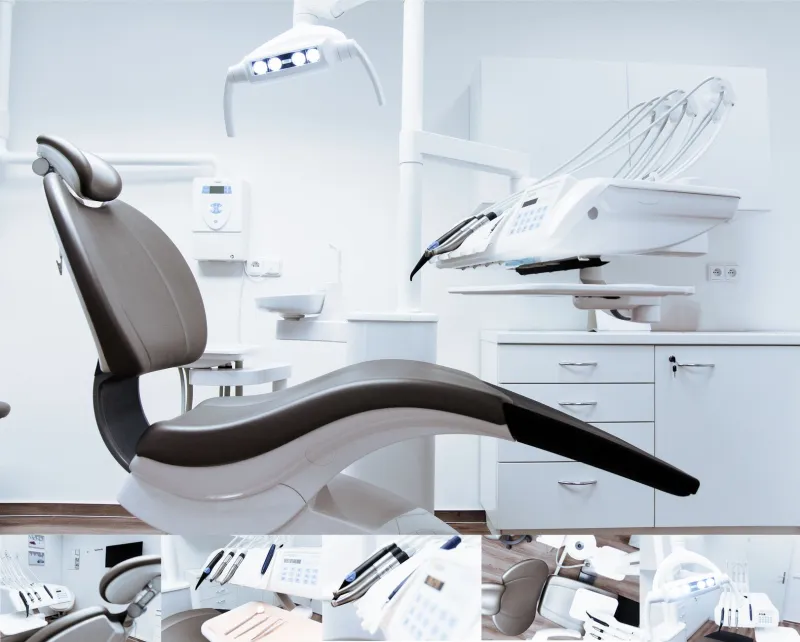
Walk into most American dental practices today and the contrast with the mid-century experience is almost hard to process. Digital X-rays deliver a fraction of the radiation of older film-based imaging and produce results instantly on a screen. Intraoral cameras let patients see exactly what the dentist sees. Chairs are padded, reclined, and sometimes heated. Many offices pipe in music or mount televisions on the ceiling.
Topical numbing gel is applied before the anesthetic injection so patients barely feel the needle. Nitrous oxide — laughing gas — has been available for decades and remains widely used for anxious patients. Oral sedation and IV sedation options exist for people whose dental fear runs deeper than a normal nervousness. There are patients who now sleep through procedures that would have required serious willpower to endure awake in 1950.
The tools themselves are almost unrecognizable. Laser dentistry can address certain procedures without drilling at all. CAD/CAM technology allows some practices to design and mill a ceramic crown in a single appointment — a process that used to require multiple visits and a temporary crown worn for weeks.
Fear That Outlasted the Reason for It
Here's the strange part: dental anxiety remains one of the most common phobias in the United States. Surveys consistently find that somewhere between 30 and 40 million Americans avoid the dentist due to fear. That fear, for most of those people, is inherited — passed down from parents and grandparents who had genuinely legitimate reasons to dread the chair.
The mouth-body connection has also become much better understood. Research linking oral health to cardiovascular disease, diabetes complications, and pregnancy outcomes has reframed dental care as something that affects your whole body, not just your smile. Gum disease, once treated as a cosmetic concern, is now understood as a chronic inflammatory condition with systemic implications.
The Distance Traveled
It's easy to take the modern dental experience for granted. The numbing shot, the smooth drill, the polite hygienist who doesn't judge you for skipping your last appointment — these things feel routine because they are. But they're routine because of a century of incremental improvements that turned one of medicine's most feared encounters into something most people can manage with a podcast and a deep breath.
Your grandparents didn't skip the dentist because they were careless. They skipped it because going was genuinely awful. The fact that it no longer has to be is worth acknowledging — ideally, from a well-cushioned reclining chair, while someone counts your teeth and tells you everything looks fine.