Your Great-Grandmother Cooked by Feel. Now We Cook by Algorithm.
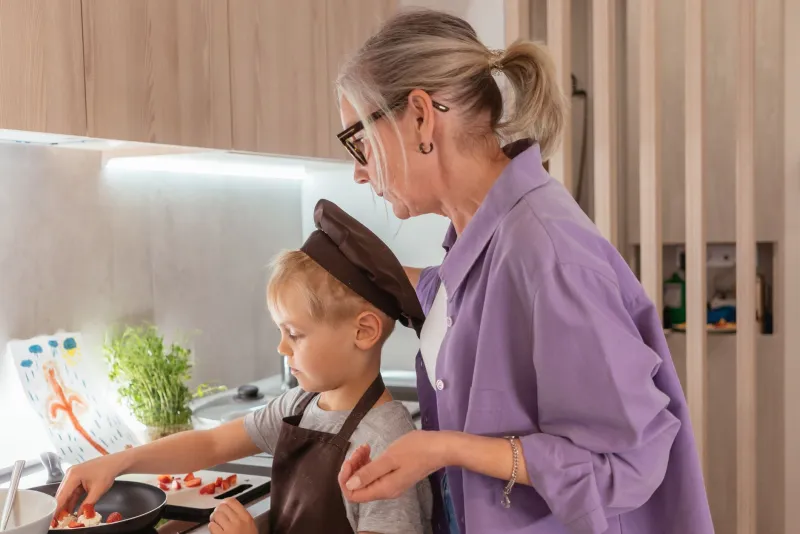
She didn't measure the flour. She didn't weigh the chicken breast. She didn't log the meal into an app or check the macros before plating. She cooked the way her mother taught her — by watching, smelling, tasting, and knowing. The biscuits came out right because she'd made them five hundred times and her hands knew what the dough was supposed to feel like.
That kind of kitchen confidence has become genuinely rare in modern America. In its place: a complicated ecosystem of nutrition trackers, instant-read thermometers, recipe apps with five-star ratings, and a low-grade anxiety that what you're putting on the table might not be optimized enough.
How did something as fundamental as feeding your family become so technically demanding?
Cooking as Inherited Language
For most of American history, home cooking was passed down the way language was — through immersion and repetition, not instruction manuals. Grandmothers taught daughters by having them stand at the stove. Recipes, when written down at all, were more like prompts than protocols. "A handful of this." "Cook until it smells right." "You'll know when it's done."
This wasn't imprecision. It was a different kind of precision — one stored in the body rather than on paper. Women (and it was overwhelmingly women for most of this history) developed an intuitive fluency with heat, texture, and proportion that took years to build and required no external tools to access.
The mid-century American kitchen was a place of confidence. Casseroles were assembled from memory. Pies were rolled out without a YouTube tutorial. Sunday roasts happened every week without a thermometer probe or a convection setting. The food wasn't always extraordinary, but it was consistent, nourishing, and produced without drama.
When Nutrition Science Entered the Kitchen
The cracks started showing in the 1970s and 1980s. Nutrition science — still relatively young and frequently contradicting itself — began filtering into popular culture. Fat was the enemy. Then carbs. Then sugar. Then processed food. Then all food if you listened long enough.
Diet culture exploded. Calorie counting moved from clinical weight-loss programs into everyday kitchens. The USDA food pyramid arrived in 1992 and told Americans, in a visual format simple enough to put on a cereal box, how to eat. Except the science behind it was contested, the recommendations shifted, and people started feeling less certain about meals their grandmothers had made without a second thought.
Cookbooks multiplied. Cooking shows moved from practical instruction to entertainment spectacle. Julia Child had taught Americans how to cook. By the time the Food Network arrived in 1993, cooking had become something you watched more than practiced.
The App Generation Enters the Kitchen
Now step into the modern home kitchen and the infrastructure is remarkable. The average cooking-interested American in 2024 might have an Instant Pot, an air fryer, a sous vide circulator, a digital kitchen scale, a high-powered blender, and a cast iron skillet they bought because a Reddit thread told them it was essential. They have apps for recipes, apps for grocery lists, and apps that scan barcodes and automatically log nutritional data.
MyFitnessPal alone has over 200 million registered users. Macros — the ratio of protein, fat, and carbohydrates in a meal — have become a common unit of conversation in households that would have had no idea what the word meant twenty years ago. "What are the macros on that?" is a question that would have baffled your grandmother and now appears regularly in group chats.
Recipe content has exploded in complexity. Food blogs and social media have raised the visual bar so dramatically that home cooks increasingly feel their output should look like restaurant plating. Garnishes matter. Lighting matters. Whether anyone in the house actually enjoyed the meal is almost secondary to whether it photographed well.
Did We Actually Get Better at Eating?
This is where it gets uncomfortable. Despite all the tools, all the information, all the apps and scales and optimized meal plans, American diet quality by most public health measures has not dramatically improved. Obesity rates are higher than they were in the era of intuitive cooking. Chronic diet-related illness remains widespread. Ultra-processed food still accounts for a massive share of what Americans actually consume, regardless of what they're tracking.
There's a strong argument that the complexity hasn't made us healthier — it's made us more anxious. Orthorexia, a preoccupation with eating "correctly" that can become its own disorder, has grown as a clinical concern. Food guilt, once a relatively niche experience, has been democratized by diet culture into something millions of people carry around every day.
The intuitive eater — someone who cooks from instinct, eats what their body signals, and doesn't audit the experience afterward — is increasingly positioned as a radical figure rather than the default one.
What Got Lost Between the Cast Iron and the Algorithm
There's real value in some of what modern food culture has introduced. Awareness of nutrition isn't nothing. Diverse cuisines have entered American home kitchens in ways that would have been inconceivable a generation ago. People with dietary restrictions have better tools than ever. Food safety knowledge has genuinely improved.
But something quieter has been lost. The confidence of the cook who doesn't need to be told how long to roast the chicken because she's roasted a thousand chickens. The pleasure of a meal that wasn't planned, tracked, or documented. The kitchen as a place of comfort and rhythm rather than a performance space with an audience.
Your great-grandmother's biscuits didn't have macros. They just had butter, and they were perfect.