The Guy Who Checked Your Oil and Knew Your Dog's Name Has Been Replaced by a Screen and a Squeegee
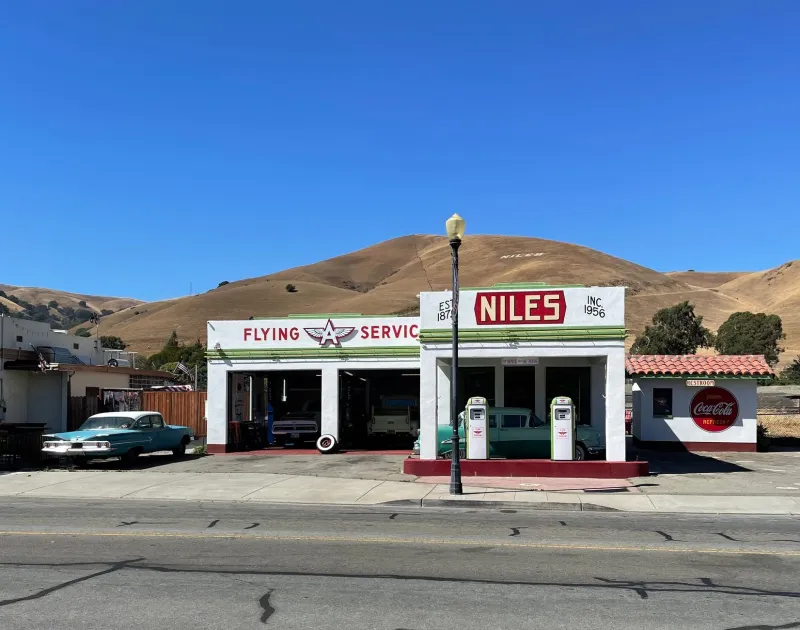
Pull In, Sit Back, Get Taken Care Of
There's a version of America that most people under forty have never experienced firsthand: you pull your car into a gas station, and before you've even rolled down the window, a guy in a uniform is walking toward you. He asks how much you want, starts the pump, pops the hood without being asked, checks the oil, wipes the windshield, and sends you on your way with a wave.
That wasn't a luxury service. That was just how gas stations worked.
For most of the twentieth century, the full-service filling station was a fixture of American community life. It wasn't just a place to buy fuel — it was a neighborhood institution, often independently owned, where the guy behind the pump had worked for twenty years and knew half his customers by their first names, their cars, and occasionally their kids' Little League schedules.
Today, that world is almost entirely gone. And its disappearance is about more than nostalgia.
How the Full-Service Station Actually Functioned
At the height of the full-service era — roughly the 1940s through the early 1970s — filling stations were built around the attendant. The business model depended on labor-intensive service as a differentiator. You competed not just on price but on how well you took care of people.
Many stations were franchise operations attached to major oil brands — Esso, Gulf, Texaco — but they were locally owned and operated. The owner often worked the pumps himself, especially in smaller towns. He knew which customers had old cars with temperamental engines and which ones needed to be reminded to check their tire pressure before a long drive.
The service was genuine. Attendants were trained to check oil, coolant, and tire pressure as a matter of routine. They cleaned your windshield while the tank filled. In winter, they'd sometimes help scrape ice. It wasn't performative customer service — it was the job, and most people who held it took it seriously.
The Moment Everything Changed
The shift began in the early 1970s, accelerated by the oil crisis and a new economic logic that valued throughput over relationship. Self-service pumps had existed in limited form since the 1940s, but regulatory barriers and consumer habits kept them marginal. Oregon and New Jersey, famously, held out — New Jersey still bans self-service pumping today.
Everywhere else, the transition happened fast once it started. Self-service was cheaper to operate. Customers, conditioned by the promise of lower prices per gallon, went along with it. By the early 1980s, full-service had become a premium option at most stations, often priced significantly higher. By the 1990s, it had largely vanished outside of a few holdout states and upscale areas.
The independent station owner gave way to corporate-owned convenience store chains — your Wawas, your Sheetz locations, your Circle K franchises. These are efficient operations. They sell a lot of coffee and lottery tickets. They are not, by any reasonable definition, community institutions.
The Convenience Store Pivot and What It Reveals
Modern fuel stops aren't really gas stations anymore — they're convenience stores that happen to sell gas, often as a loss leader to get people inside. The profit isn't in the fuel; it's in the Monster Energy drinks, the hot dogs rotating under heat lamps, and the cigarettes behind the counter.
The employee behind that counter is typically working for minimum wage or close to it, managing a store largely alone, with no particular knowledge of or interest in your vehicle. That's not a criticism of the workers — it's a description of a job that's been stripped of its original purpose. Nobody hired them to check your oil. Nobody trained them for it. The relationship between the fuel stop and the customer has been reduced to a financial transaction, completed as quickly as possible.
Pay-at-the-pump technology completed the transformation. Now you don't need to interact with another human being at all. You tap your card, select your grade, fill your tank, and leave. The entire experience can pass without a single word spoken.
The Small Business Relationship We Stopped Noticing
What the full-service station represented — at its best — was a version of American commerce built on recurring personal relationships. Your mechanic knew your car. Your pharmacist knew your prescriptions. Your gas station attendant knew your vehicle's quirks. These weren't just transactions; they were ongoing relationships with people who had a genuine stake in your satisfaction because you'd be back next week.
That model has eroded across almost every sector of American retail, and the gas station is just one of the most visible examples. The economic pressure toward scale, standardization, and labor reduction has produced services that are faster and often cheaper — but emptier in ways that are hard to quantify.
There's actual research suggesting that the erosion of these everyday social touchpoints — the small talk with the attendant, the wave from the guy who's seen you every Tuesday for five years — contributes to the broader loneliness epidemic that public health researchers have been documenting for the past decade. These interactions weren't profound. But they were real, and they added up.
Something Was Lost at the Pump
Oregon recently loosened its full-service requirement, allowing self-service statewide. The last major holdout in the continental US is now New Jersey, where attendants still pump your gas by law, and residents have developed a fierce cultural attachment to the practice. Ask a New Jerseyan about it and you'll get a passionate defense that's only partly about convenience — it's really about the feeling of being taken care of, even in a minor way, by another person.
The rest of the country traded that feeling for a few cents off per gallon. Whether that was a good deal depends on what you think human contact is worth.