Birth Moved Into Hospitals for 50 Years. Now It's Quietly Moving Back Out.
Birth Moved Into Hospitals for 50 Years. Now It's Quietly Moving Back Out.
If you were born in the United States before 1940, there's a good chance you entered the world in a bedroom, not a delivery room. Your great-grandmother likely gave birth the same way her mother did — at home, attended by a midwife or a local doctor, surrounded by family. It wasn't considered brave or unconventional. It was just how birth happened.
That world disappeared with striking speed. By 1970, more than 99 percent of American births took place in hospitals. The shift was so complete, and happened within such a compressed period of time, that home birth went from universal to fringe within a single generation. For decades, it barely registered as a mainstream option at all.
Now, quietly, the numbers are moving again. And the reasons why tell a complicated story about medicine, autonomy, and what it means to trust a system — or decide you don't.
The Era Before the Hospital Room
At the turn of the 20th century, roughly half of all American births were attended by midwives. These were experienced practitioners — many of them women with deep community roots and generations of knowledge — who guided laboring women through delivery in familiar surroundings. The other half were attended by physicians, but even most of those births happened at home.
Hospitals, at that point, were not places most people associated with safety. They were where you went when something had gone terribly wrong — institutions that carried a real risk of infection and were largely reserved for the poor or the critically ill. A middle-class woman giving birth at home wasn't avoiding hospitals out of ignorance. She was avoiding them for the same reason you'd avoid them today if you had a reasonable alternative.
Mortality rates were sobering by modern standards, but they were driven largely by factors that had little to do with location: infection, hemorrhage, and complications that medicine of the era couldn't adequately treat regardless of setting.
How Medicine Claimed Childbirth
The shift toward hospital birth was driven by a convergence of forces — some genuinely beneficial, others more complicated.
In the early 20th century, the American medical establishment began actively working to professionalize obstetrics and sideline midwives. A landmark 1910 report funded by the Carnegie Foundation — the Flexner Report — reshaped medical education and elevated physician-led care as the scientific standard. Midwifery, largely practiced by women and often by Black and immigrant women in particular, was characterized as primitive and dangerous. Licensing restrictions and outright bans followed in many states.
At the same time, genuine medical advances made hospitals more appealing. Antiseptic technique dramatically reduced infection. Blood transfusions became possible. Anesthesia — particularly the "twilight sleep" method that gained popularity in the 1910s and 20s — promised women a way to escape the pain of labor entirely. Hospitals offered these technologies. Homes did not.
By the 1950s, the transformation was essentially complete. Hospital birth wasn't just the norm — it was the definition of responsible motherhood. Birth had become a medical event, managed by physicians, governed by protocols, and increasingly standardized. Women were often sedated, strapped down, and separated from their babies after delivery. Fathers waited in hallways. The experience was efficient and clinical in ways that felt, to many, like progress.
What the Data Eventually Revealed
For decades, the assumption was straightforward: hospitals were safer, therefore hospital birth was better. But as researchers began studying outcomes more carefully, the picture grew more nuanced.
In the United States, maternal and infant mortality rates did fall dramatically through the 20th century — but untangling how much of that improvement was due to hospital birth specifically, versus improvements in nutrition, sanitation, and the treatment of complications, proved difficult. Meanwhile, the U.S. began falling behind peer nations in maternal mortality comparisons, even as it maintained one of the most heavily medicalized birth cultures in the developed world.
A major 2014 study published in the Journal of Midwifery and Women's Health found that planned home births attended by certified midwives for low-risk pregnancies resulted in outcomes comparable to hospital births, with significantly lower rates of medical intervention — including cesarean sections, episiotomies, and labor induction. The key phrase was "low-risk" and "planned" — outcomes for unplanned home births, or those without skilled attendants, remained worse.
The U.S. cesarean rate, which now hovers around 32 percent, is one of the highest in the developed world and well above the 10–15 percent range the World Health Organization considers medically necessary. That statistic has become a focal point for advocates who argue that hospital birth culture has overcorrected — replacing one set of risks with another.
The Quiet Return
Between 2004 and 2017, the home birth rate in the United States roughly doubled, according to CDC data — still a small percentage of overall births, but a meaningful directional shift. Birth centers, freestanding facilities that offer a middle path between home and hospital, have expanded significantly. Certified nurse-midwives now attend nearly 10 percent of all U.S. births, a share that has grown steadily for two decades.
The women driving this shift are not, on average, rejecting medicine. Many are highly educated, well-researched, and deeply familiar with the risks. What they're often pushing back against is a birth experience they feel has become over-managed — where interventions cascade, where decision-making authority belongs to the institution rather than the patient, and where the emotional and relational dimensions of birth are secondary to clinical efficiency.
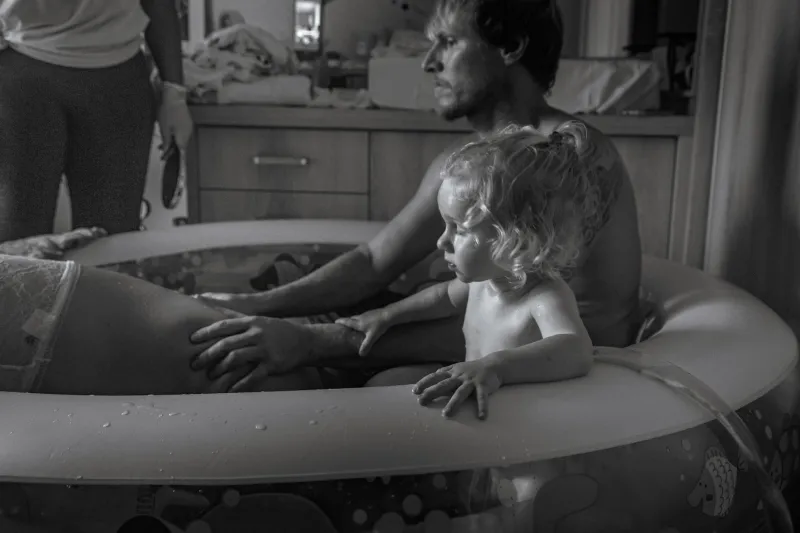
The COVID-19 pandemic accelerated the trend. As hospitals restricted visitors and altered protocols during 2020, a measurable number of women who had planned hospital births shifted to home or birth center settings instead. Some of them never went back.
A Return to Something Older
What's striking about this moment is that it isn't really new. Midwife-led care, out-of-hospital birth, and a focus on the laboring woman's experience and autonomy aren't innovations — they're recoveries. The framework existed before the hospital took over, and in much of the developed world — the Netherlands, the UK, Scandinavian countries — it never fully disappeared.
The American story is, in some ways, an outlier: a country that abandoned a working model almost entirely, built a replacement system that created its own problems, and is now, slowly and partially, finding its way back.
Your great-grandmother didn't have a birth plan. She had a midwife and a bedroom. The fact that those things are starting to sound familiar again says something interesting about where we've been — and where we might be headed.