Medicine Used to Be a Lot More Guesswork Than You'd Imagine
Medicine Used to Be a Lot More Guesswork Than You'd Imagine
Somewhere around 1952, a child in suburban Ohio develops a fever and a nasty cough. Her mother calls the family doctor, who arrives at the house that evening with a black bag and a warm bedside manner. He listens to her chest, checks her throat, and makes a judgment call based on what he can hear, see, and feel. He prescribes rest and maybe a sulfa drug if he has it. He writes his notes by hand in a paper file he keeps in his office. And then he leaves, because there isn't much else to do.
That child has pneumonia. In 1900, she probably dies. In 1952, she has a decent chance. In 2024, she gets a rapid strep test, a chest X-ray read by a radiologist in another city, and a prescription sent electronically to the pharmacy down the street — all within two hours.
The distance between those two scenarios is almost impossible to fully absorb.
The Era of the Doctor Who Knew Everything (Because There Wasn't Much to Know)
For much of American medical history, the general practitioner was exactly that — general. One doctor handled everything from broken bones to childbirth to mental illness, often armed with little more than experience, intuition, and whatever the current medical thinking happened to be (which was sometimes quite wrong).
House calls were standard through the 1950s and into the early 1960s. The image of the doctor arriving at your door with his bag wasn't a TV fantasy — it was Tuesday. Patients didn't go to the doctor; the doctor came to them. It sounds charming now, but the flip side was that the diagnostic tools available in that living room were essentially limited to what a human being could observe with their eyes and hands.
Blood work existed but was slow and expensive. X-rays were available in hospitals but not always accessible in a hurry. The electrocardiogram had been around since the early 1900s, but you needed to be somewhere with the equipment. A doctor making a house call in 1955 was working almost entirely on clinical judgment.
Sometimes that judgment was excellent. Sometimes people died of things that a basic lab test would have caught in twenty minutes.
The Infections That Used to Kill People
This is the part that genuinely startles most people: common bacterial infections were frequently fatal as recently as the 1940s.
Strep throat could lead to rheumatic fever and permanent heart damage. A skin infection that got out of hand could turn septic within days. Pneumonia was so reliably deadly that it was called "the old man's friend" — a grim acknowledgment that it often provided a swift end to prolonged suffering.
Penicillin changed everything, almost overnight. Introduced at scale during World War II, antibiotics transformed infections that had been death sentences into inconveniences. The shift was so fast and so complete that within a generation, Americans had essentially forgotten what life without them looked like.
Today, you walk into an urgent care clinic, test positive for strep, pay somewhere between $15 and $40 for a course of amoxicillin, and feel better by the weekend. The same infection, in your great-grandmother's time, could have cascaded into something that followed you for the rest of your life — or ended it.
What Modern Medicine Actually Looks Like
The contemporary American healthcare experience — for all its very real problems — is a genuinely extraordinary thing from a historical vantage point.
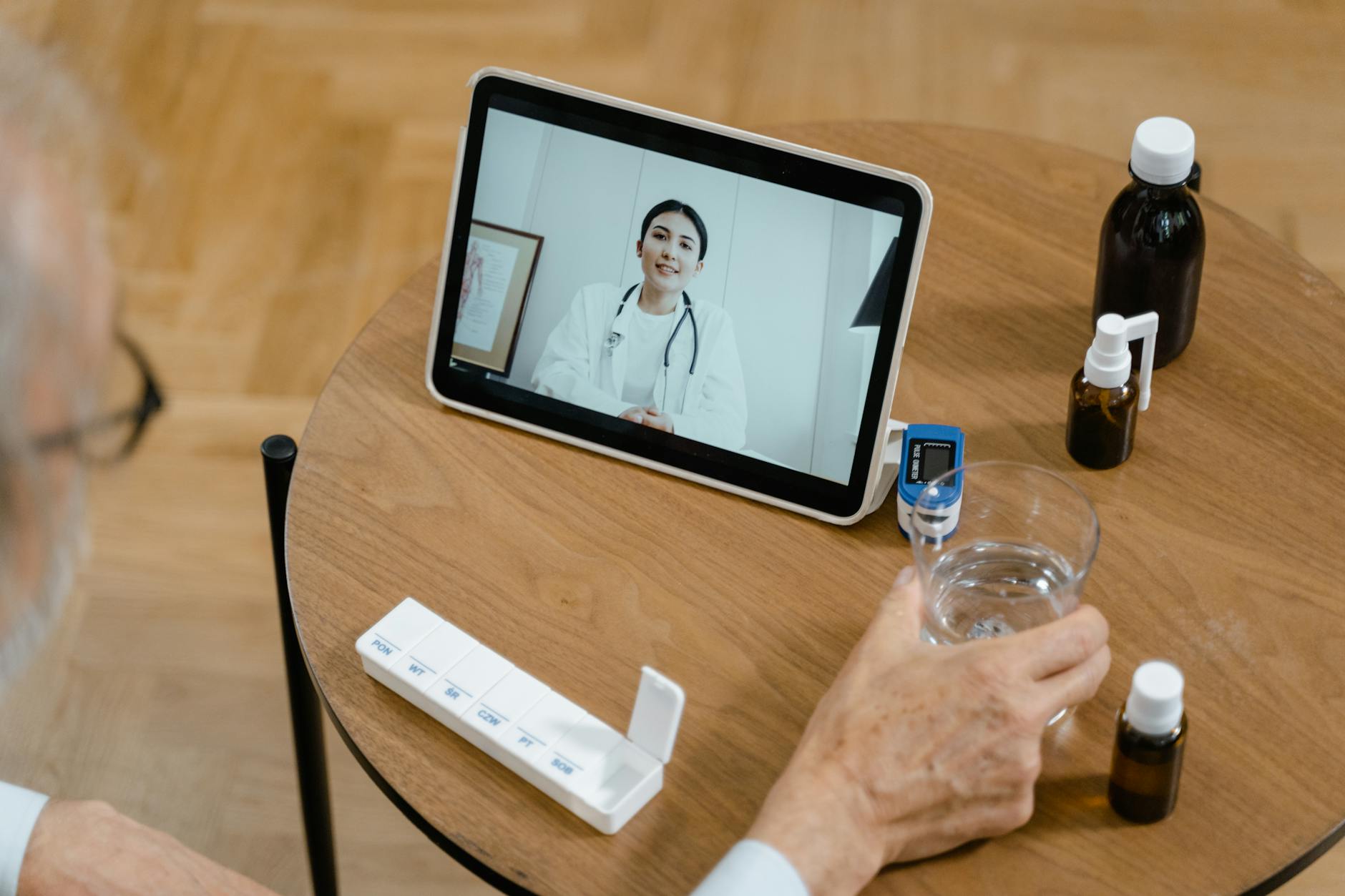
Electronic health records mean that a doctor seeing you for the first time in an emergency room can pull up your medication list, your allergies, your last bloodwork, and your surgical history in seconds. Telemedicine, which exploded during the COVID-19 pandemic and never really retreated, means that a board-certified physician can assess, diagnose, and prescribe for a wide range of conditions without either party leaving their home.
Wearable monitors track heart rhythms continuously and have detected atrial fibrillation in people who had no idea anything was wrong. MRI machines produce images of soft tissue that would have been completely invisible to any diagnostic tool available before the 1970s. Robotic-assisted surgery allows procedures through incisions smaller than a fingernail.
The average American lifespan in 1900 was around 47 years. Today it's closer to 76. That's not entirely medicine's doing — sanitation, nutrition, and reduced physical danger all played roles — but the contribution of modern healthcare to that number is enormous.
The Part We Should Still Be Honest About
None of this means the system is working well for everyone, and it would be dishonest to pretend otherwise.
The United States spends more on healthcare per person than any other developed nation, and yet ranks poorly on a range of outcome measures compared to peer countries. Millions of Americans avoid seeking care because of cost. The administrative complexity of insurance, billing, and coverage is a genuine burden that has no real equivalent in most comparable healthcare systems.
And something subtler may have gotten lost, too. The doctor who showed up at your house in 1952 knew your family. He knew your history not from a database but from memory. That relationship — unhurried, personal, long-term — is genuinely harder to find in a world of fifteen-minute appointment slots and rotating urgent care providers.
Progress in medicine has been real, sweeping, and life-saving. But progress and perfection aren't the same thing, and the honest version of this story holds both truths at once: we've come an extraordinary distance, and we're still not where we need to be.