The Mile-Long Walk to School Built Character. Now It Builds Panic.
When Eight-Year-Olds Were Navigation Experts
Carol Henderson still remembers the route she walked to Lincoln Elementary in 1978: three blocks north on Maple Street, left on Oak Avenue past the Hendersons' barking collie, right on Pine Street, then straight until you saw the flagpole. She was seven years old and made this journey twice daily, rain or shine, with her younger brother in tow.
 Photo: Carol Henderson, via people.com
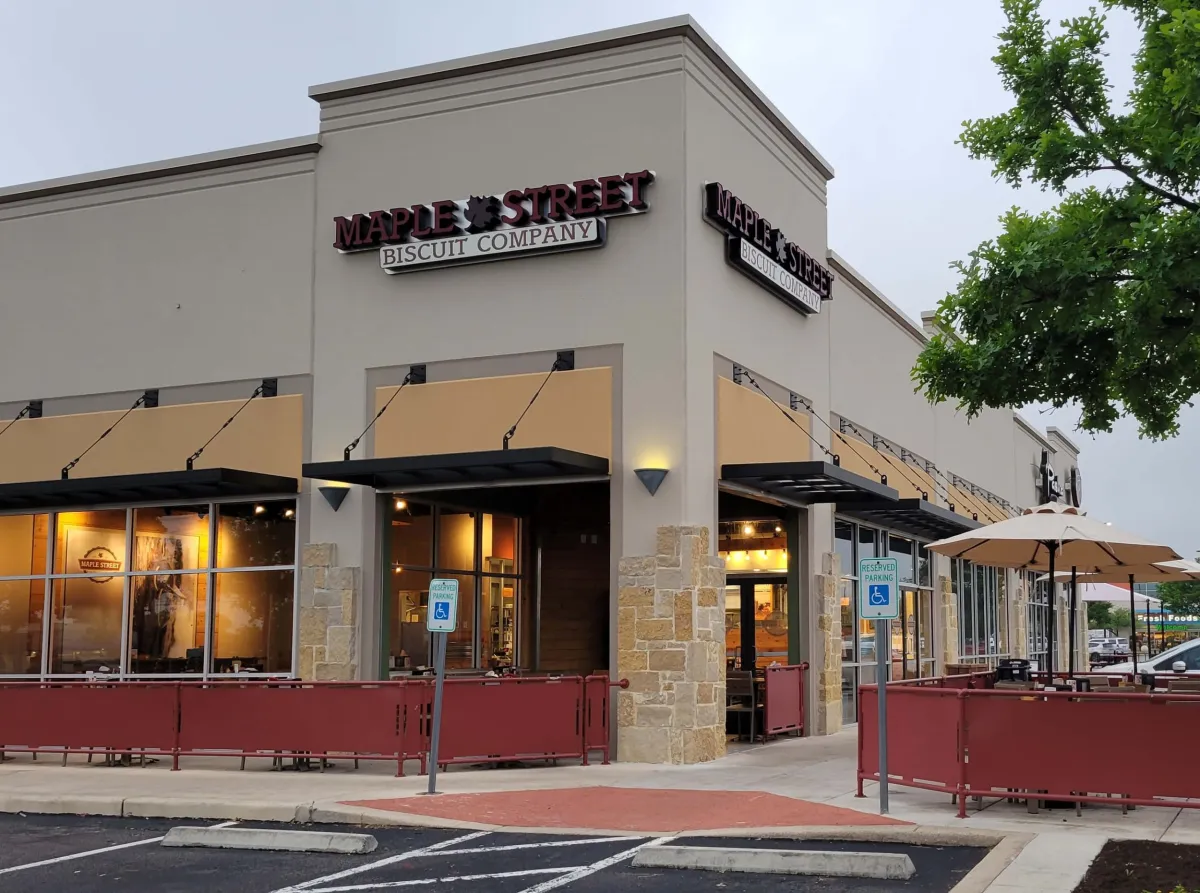 Photo: Maple Street, via images.squarespace-cdn.com
 Photo: Lincoln Elementary, via beamprof.com
"Nobody thought it was weird," Henderson recalls. "That's just what kids did. You learned your neighborhood like the back of your hand."
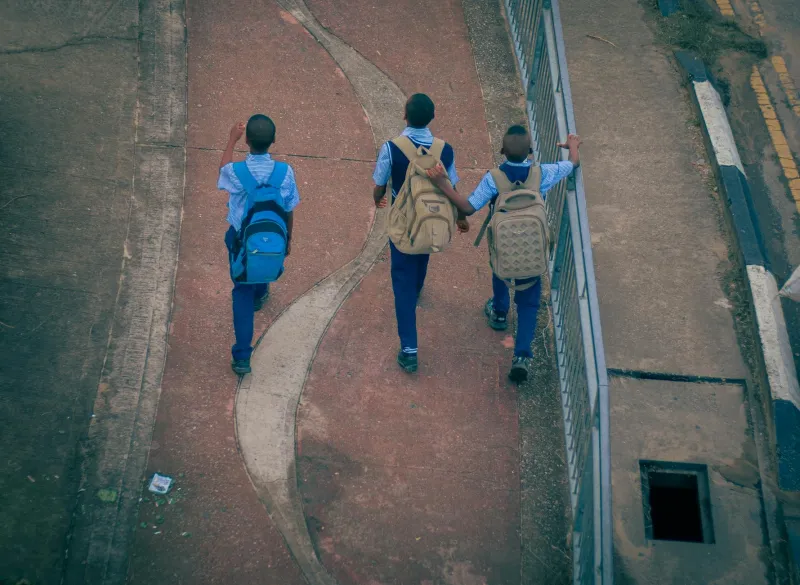
In 1969, roughly 90% of American children who lived within a mile of school walked or biked there independently. They navigated traffic, weather, and neighborhood dynamics without adult supervision, building spatial awareness, problem-solving skills, and confidence along the way.
Today, that figure has plummeted to less than 13%. The mile-long solo journey that once defined American childhood has become so rare that many schools no longer even provide crossing guards.
The Geography Lessons Nobody Planned
Walking to school taught children things no classroom could replicate. They learned which streets flooded during heavy rain and which shortcuts became mud pits in spring. They discovered which neighbors waved from kitchen windows and which dogs were friendly despite their fierce barking.
Kids developed internal maps of their communities that extended far beyond school routes. They knew where the best climbing trees grew, which stores would let you warm up on cold mornings, and how to read the subtle signs that indicated when they were welcome somewhere or when they should keep moving.
This geographical literacy created a generation of children who felt ownership over their neighborhoods. They weren't passengers being transported between destinations; they were explorers who understood how their world fit together.
When Weather Was Just Weather
The walking-to-school generation developed a different relationship with weather than today's climate-controlled kids. A snowy morning meant slower progress and careful footwork, not a reason to stay home. Rain required strategic planning around overhangs and awnings, not a parent with an umbrella.
Children learned to dress for conditions they'd encounter during a 20-minute walk, not just the temperature inside a heated car. They understood how wind patterns worked around buildings and which side of the street stayed drier during storms.
More importantly, they learned that mild discomfort wasn't an emergency. Getting cold, wet, or tired during the walk to school was just part of life, not a crisis requiring adult intervention.
The Turning Point
The shift away from independent school travel didn't happen overnight. Through the 1980s, most suburban and small-town children still walked to school regularly. The change accelerated in the 1990s, driven by several converging factors.
High-profile abduction cases, though statistically rare, created a perception that neighborhoods had become dangerous. The rise of two-income households meant fewer adults were available to monitor children's comings and goings. Suburban development patterns created schools farther from residential areas, making walking impractical even for older children.
Perhaps most significantly, cultural expectations around parenting shifted. The same level of supervision that previous generations considered neglect became the new minimum standard of responsible parenting.
The Modern School Run
Today's equivalent of the childhood walk to school is the "school run" — a logistical operation that consumes hours of parental time daily. Parents line up in cars outside schools, engines idling, waiting to transport children distances their grandparents would have considered embarrassingly short.
This shift has created its own problems. Traffic around schools has increased dramatically, making neighborhoods actually more dangerous for the few children who do walk. Air quality near schools has deteriorated due to idling vehicles. Many schools have had to hire additional staff just to manage car traffic during pickup and dropoff times.
The irony is stark: in trying to protect children from perceived dangers, we've created new ones while eliminating the benefits that walking provided.
What the Research Shows
Studies comparing children who walk to school with those who are driven reveal significant differences in physical and mental health. Walking children tend to be more physically active throughout the day, have better cardiovascular fitness, and maintain healthier weights.
Perhaps more surprisingly, children who walk to school also show better performance on tests measuring spatial awareness, problem-solving, and independence. The daily navigation challenge appears to develop cognitive skills that extend beyond geography.
Researchers have also found that children who walk to school report feeling more connected to their communities and more confident in their ability to handle unexpected situations.
The Legal Landscape
In many parts of America, allowing children to walk to school alone has become legally risky for parents. Child protective services have investigated families for letting children as old as 10 walk short distances unaccompanied. Some states have had to pass "free-range parenting" laws explicitly protecting parents' rights to allow age-appropriate independence.
This represents a dramatic shift in social norms. The same behavior that was considered normal parenting in 1980 can now trigger legal intervention in 2024.
The Health Consequences
The elimination of walking to school has contributed to what public health experts call the "activity cliff" — the sharp decline in physical activity that occurs when children transition from naturally active lifestyles to sedentary ones.
Childhood obesity rates have tripled since the walking-to-school era ended. Anxiety and depression among children have increased significantly, with some researchers pointing to reduced independence and outdoor time as contributing factors.
Physical therapists report seeing more children with poor balance, coordination, and spatial awareness — skills that walking to school once developed naturally.
The Safety Paradox
Despite parental fears, actual crime statistics show that today's children are statistically safer than previous generations. Violent crime against children has declined significantly since the 1990s. The risk of abduction by strangers, while never zero, remains extraordinarily low.
Meanwhile, the health risks associated with sedentary lifestyles and reduced independence have grown substantially. We've eliminated a tiny risk while creating larger ones.
Small Signs of Change
Some communities are working to bring back independent school travel through "walking school bus" programs and improved infrastructure. A few schools have designated "walk zones" where parents are encouraged to park several blocks away and let children complete the journey on foot.
These efforts face significant cultural headwinds. Many parents who walked to school themselves still feel uncomfortable allowing their own children the same independence, despite living in statistically safer neighborhoods.
The generation that built character through mile-long walks to school now drives their children to the corner store. Whether future generations will rediscover the benefits of independent navigation remains an open question, but the contrast with just a few decades ago couldn't be starker.