When Your Doctor Came to You: How America's Neighborhoods Lost Their Medical House Calls
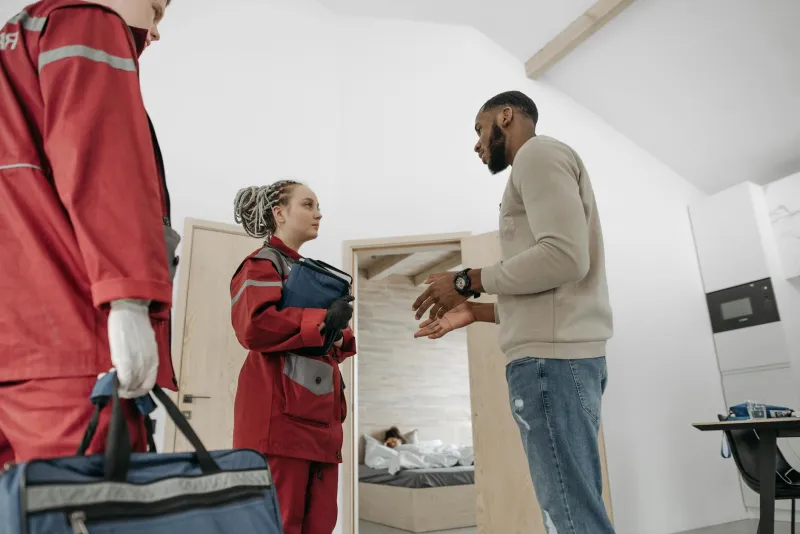
Picture this: It's 1940, and your child has a fever that won't break. Instead of bundling them into a car and driving to a clinic, you simply call Dr. Henderson. Within an hour, he's at your front door with his familiar black bag, examining your little one in their own bedroom while you hover nearby in your robe.
This wasn't luxury healthcare for the wealthy—it was just how medicine worked for most Americans until the 1960s. The family doctor didn't just know your medical history; he knew where you kept the spare key.
The Golden Age of the Black Bag
Before World War II, roughly 40% of all physician-patient interactions happened in the patient's home. Doctors structured their entire practice around making rounds—visiting patients in a logical geographic sequence, often covering the same neighborhoods on the same days each week.
Dr. William Carlos Williams, the famous poet who was also a practicing physician in New Jersey, described his typical day in the 1930s: morning office hours, afternoon house calls, evening office hours, then more house calls until well past dinner. His car was his mobile office, trunk packed with basic medical supplies and diagnostic tools.
The equipment was simple but effective. A stethoscope, thermometer, blood pressure cuff, and basic medications could handle most common ailments. Serious cases requiring surgery or specialized equipment meant a trip to the hospital, but those were the exceptions, not the rule.
Families developed deep relationships with their physicians. Dr. Sarah Mitchell, who practiced in rural Ohio during this era, later recalled knowing not just her patients' medical conditions but their financial struggles, family dynamics, and personal quirks. "I delivered babies in farmhouse bedrooms, treated pneumonia in tenement kitchens, and held hands with dying patients in parlors across three counties," she wrote in her memoirs.
When Cars Changed Everything
The transformation didn't happen overnight, but several forces converged in the post-war boom to make house calls increasingly impractical.
First came suburban sprawl. As families moved from dense urban neighborhoods and small towns to sprawling suburbs, the geographic logic of house calls collapsed. Instead of visiting six families on the same block, doctors found themselves driving twenty minutes between patients scattered across subdivisions.
The economics became brutal. In 1950, a house call might take 30 minutes total—ten minutes driving, twenty minutes with the patient. By 1965, that same visit could require an hour of driving for the same twenty minutes of medical care. As healthcare became more complex and competitive, physicians couldn't afford that inefficiency.
Meanwhile, medical technology was advancing rapidly. The simple black bag gave way to sophisticated diagnostic equipment that couldn't be transported. EKG machines, X-ray equipment, and laboratory facilities became essential tools that required patients to come to the medicine, not the other way around.
The Rise of Appointment Culture
By the 1970s, the house call had virtually disappeared from American medicine. A practice that had defined healthcare for centuries was suddenly relegated to emergency situations and a handful of specialized services.
This shift fundamentally changed how Americans think about medical care. Instead of medicine being something that came to you when you were sick, it became something you had to actively seek out. The appointment became king—a scheduled interaction in a clinical setting, replacing the spontaneous, contextual care that happened in homes.
Patients lost something profound in this transition. When doctors visited homes, they saw how people actually lived. They noticed the moldy bathroom that might be triggering asthma, the steep stairs that posed a fall risk for elderly patients, or the family dynamics that affected mental health. This contextual information often proved more valuable than any test result.
What We Gained and Lost
The clinic-based model brought undeniable benefits. Doctors could see more patients efficiently, had access to better diagnostic tools, and could maintain sterile environments for procedures. Healthcare became more standardized and, in many ways, more effective.
But the personal connection suffered. Dr. Robert Butler, a geriatrician who practiced during the transition, noted that "we gained precision but lost intimacy. We could diagnose conditions more accurately, but we understood our patients less completely."
The economic impact was significant too. House calls were typically more expensive per visit, but they often prevented more costly emergency room visits and hospitalizations. When doctors could assess patients in their home environment, they could often provide preventive care that addressed problems before they became serious.
The Modern Echo
Today, house calls are making a modest comeback, driven by telemedicine technology and concierge medicine services. Some physicians are rediscovering the value of seeing patients in their natural environment, particularly for elderly patients or those with mobility issues.
But the infrastructure that supported widespread house calls—doctors who knew neighborhoods intimately, patients who expected to be seen at home, and a healthcare system built around personal relationships—has largely disappeared.
The shift from house calls to clinic visits represents more than just a change in logistics. It reflects a broader transformation in how Americans relate to healthcare—from something personal and contextual to something institutional and standardized. We gained efficiency and technological sophistication, but lost the intimacy of medicine that knew where you lived and how you lived.
The next time you sit in a waiting room, remember: there was a time when the waiting room was your own living room, and the doctor came to you.