When Neighbors Were Your Safety Net: How America's Front Porch Culture Disappeared
When Neighbors Were Your Safety Net: How America's Front Porch Culture Disappeared
In 1950, if Mrs. Henderson down the street didn't see you for a few days, she'd knock on your door with a casserole and genuine concern. If your car wouldn't start, three neighbors would appear with jumper cables before you could finish explaining the problem. Children played freely in yards while parents kept a collective eye on them from front porches that served as neighborhood command centers.
Today, you might live next to someone for years without learning their last name.
The Era of Open Doors
Mid-20th century American neighborhoods operated on an unspoken social contract. Front doors stayed unlocked during the day. Children wandered freely between houses, often eating dinner wherever they happened to be when the call came. Neighbors borrowed everything from cups of sugar to lawnmowers, creating webs of mutual dependence that strengthened community bonds.
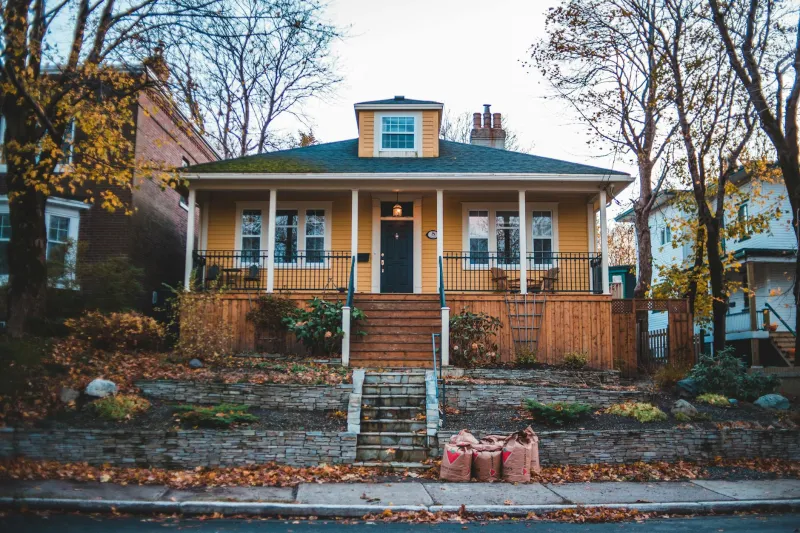
The front porch was the nerve center of this system. Families spent evenings sitting outside, naturally encountering neighbors walking by. These casual interactions built relationships that translated into real support during crises. When someone got sick, neighbors organized meal trains without being asked. When a family faced financial trouble, the community quietly rallied with job leads and practical help.
"Everyone knew everyone's business, and that wasn't necessarily a bad thing," recalls 78-year-old Detroit resident Margaret Chen, describing her childhood neighborhood. "It meant people cared about each other."
The Great Indoor Migration
The transformation began in the 1960s with a technology that seemed completely unrelated to social connection: air conditioning. As homes became more comfortable inside, families retreated from their porches. The evening ritual of sitting outside, greeting passersby, and chatting with neighbors gradually disappeared.
Suburban design accelerated this shift. New developments prioritized privacy over community interaction. Front porches shrank or disappeared entirely, replaced by private back decks. Fences grew higher. Garage doors became the primary entry point, allowing residents to drive directly into their homes without encountering neighbors.
The rise of television further pulled families indoors. Why sit outside making small talk when you could watch "The Ed Sullivan Show" in climate-controlled comfort?
From Borrowing Tools to Buying Everything
The economic prosperity of the post-war era meant families could afford to own rather than borrow. Why ask to use your neighbor's drill when you could buy your own? This shift from sharing to individual ownership reduced the practical reasons neighbors needed each other.
Shopping patterns changed too. Instead of walking to corner stores where you'd bump into neighbors, families drove to suburban malls and later, big-box stores. The casual encounters that built community relationships became increasingly rare.
The Digital Fortress
The internet and smartphone era completed the transformation. Social media promised to connect us with more people than ever before, but it often replaced local, face-to-face relationships with distant, digital ones. We might know intimate details about a college friend's vacation while remaining strangers to the family across the street.
Remote work, accelerated by the pandemic, further reduced neighborhood interaction. With no need to leave for work, many Americans can now go days without stepping outside their property.
Ring doorbells and security cameras, marketed as safety improvements, often increase suspicion between neighbors rather than building trust. Instead of knowing who belongs in the neighborhood through personal relationships, we rely on technology to identify "strangers."
The Cost of Privacy
This shift toward privacy came with unexpected consequences. Social isolation has become a public health crisis, with the Surgeon General comparing its health impacts to smoking 15 cigarettes daily. The neighborhood safety net that once caught people during tough times has largely disappeared.
When Hurricane Sandy hit the Northeast in 2012, many urban residents discovered they didn't know which neighbors were elderly or might need help. The informal care networks that once existed naturally had to be rebuilt from scratch during the crisis.
Loneliness among young adults has skyrocketed, partly because they lack the casual, low-stakes social interactions that neighborhoods once provided automatically. Dating apps try to replace the organic way people once met through community connections.
What We Actually Lost
The old system wasn't perfect. Neighborhood gossip could be cruel, and social pressure sometimes stifled individual expression. Privacy has genuine value, and many people are happier without constant community scrutiny.
But something irreplaceable was lost in the transition. The automatic support system that helped families through crises. The way children learned social skills through natural interaction with adults beyond their parents. The sense that you belonged somewhere specific, with people who would notice if you were gone.
Research shows that neighborhoods with higher social cohesion have lower crime rates, better mental health outcomes, and stronger economic resilience. The isolation that seemed like freedom often became its own kind of prison.
The New Neighborhood
Some communities are deliberately trying to rebuild connection. Neighborhood apps like Nextdoor attempt to recreate digital versions of front-porch conversations, with mixed results. "Intentional communities" and co-housing developments design physical spaces to encourage interaction.
Young families, especially, are rediscovering the value of knowing their neighbors. Parents organize block parties and create informal childcare networks, recognizing that community support makes their own lives easier and richer.
The question isn't whether we can return to 1950s neighborhood life – we can't and probably shouldn't. But as Americans increasingly recognize the health costs of isolation, we might need to deliberately rebuild some of what we accidentally lost when we closed our front doors and retreated into our private worlds.
After all, knowing your neighbors' names isn't nostalgia. It's a form of insurance that no app can replace.