When Workers Actually Left the Office for Lunch: How America Killed the Sacred Midday Break
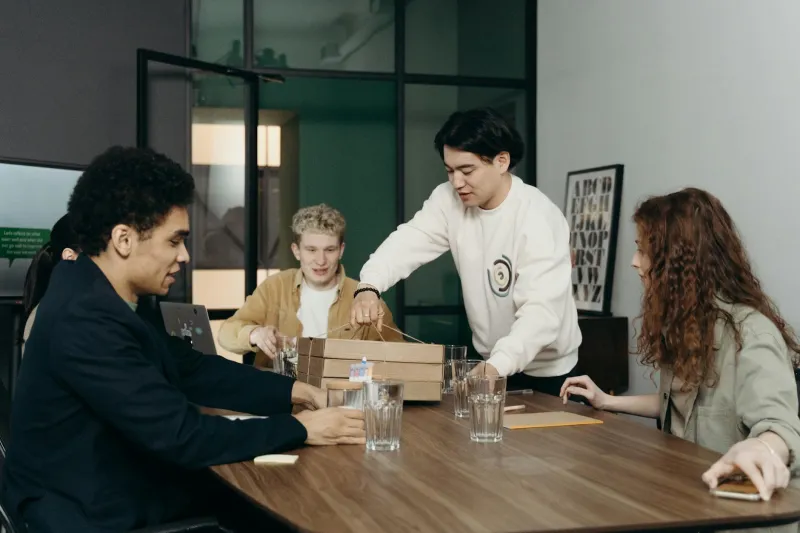
Picture this: It's 1975, and at exactly noon, office buildings across America empty like someone pulled a fire alarm. Workers stream out onto sidewalks, heading to diners, cafeterias, and restaurants for what everyone simply called "lunch hour." Not lunch break. Not lunch period. Lunch hour.
Back then, the midday meal wasn't just food—it was a daily reset button that nobody questioned. You left your desk, walked somewhere else, sat down with actual humans, and ate actual food with actual utensils. For a full sixty minutes, work stopped existing.
Today? Most Americans eat lunch at their desks while scrolling through emails, if they eat lunch at all. We've turned the most basic human need into a source of workplace guilt.
The Golden Age of Getting Out
In the decades following World War II, the lunch hour was as sacred as the weekend. Office workers had two choices: pack a lunch and eat it in the company cafeteria, or venture out into the world for a proper sit-down meal. Either way, you left your workspace.
Restaurants built their entire business models around this predictable midday rush. Diners offered "blue plate specials" specifically for the lunch crowd. Department stores had dedicated lunch counters. Even small towns had at least one spot where the office workers gathered at noon.
The ritual went beyond just eating. Coworkers actually talked to each other—about life, not just spreadsheets. People read newspapers. They took walks. Some even squeezed in errands or doctor's appointments. The lunch hour was a genuine break from the workday, not an extension of it.
When Everything Started Shifting
The erosion began in the 1980s with corporate culture's obsession with productivity. Companies started viewing the lunch hour as lost time rather than necessary downtime. The rise of personal computers meant work could theoretically continue around the clock.
Suburban sprawl played a role too. As offices moved to business parks and strip malls, there were fewer walkable lunch options. Workers faced a choice: spend half their lunch hour driving to find food, or just grab something from the vending machine.
The real death blow came with the internet age. Email, instant messaging, and the expectation of constant availability turned lunch into a luxury that ambitious employees couldn't afford. Taking a full hour away from your desk started feeling like career suicide.
The Sad Desk Lunch Revolution
Today's lunch "break" is a masterclass in multitasking misery. Americans spend an average of 18 minutes eating lunch, and 67% eat at their desks. We've convinced ourselves that working through lunch makes us more productive, but science says otherwise.
The modern lunch is often a depressing affair: a sad sandwich consumed while answering emails, a protein bar scarfed down between meetings, or a delivery app meal eaten in isolation. We've created an entire industry around making lunch as efficient as possible, from meal replacement shakes to grab-and-go everything.
Meanwhile, our bodies and brains are paying the price. Without a proper midday break, stress hormones stay elevated all day. We make poorer food choices when we're rushed. And we miss out on the social connections that used to happen naturally during lunch.
What We Lost When We Lost Lunch
The disappearance of the lunch hour represents more than just a change in eating habits—it's a fundamental shift in how we view work-life balance. The old lunch hour was a daily reminder that employees were human beings with human needs, not just productivity machines.
Those midday conversations built workplace relationships in ways that Slack channels never could. The physical act of leaving the office provided mental distance from work problems. Even the simple pleasure of choosing what to eat and where to eat it was a small act of personal autonomy in an otherwise structured day.
We've also lost the communal aspect of mealtime. Restaurants that once thrived on the lunch crowd have either adapted to delivery models or disappeared entirely. The shared experience of the lunch rush—that daily migration of workers seeking sustenance—is becoming a relic of the past.
The Backlash Begins
Some progressive companies are finally recognizing what we gave up. Tech giants like Google and Facebook built elaborate cafeterias specifically to encourage employees to take real lunch breaks. Some startups have instituted "lunch and learns" that combine eating with professional development.
There's also a growing movement toward "mindful lunch breaks"—encouraging employees to step away from screens and actually focus on their food. Some companies have even banned lunch meetings, recognizing that eating while working defeats the purpose of both activities.
But these efforts are swimming against a powerful current. The gig economy, remote work, and the general acceleration of American life all work against the idea of a leisurely lunch hour.
Why It Matters More Than Ever
In our hyperconnected, always-on world, the lunch break might be more important than ever. It's one of the few opportunities for genuine rest during the workday. It's a chance to step back, reset, and return to work with fresh perspective.
The countries that still protect lunch breaks—like France with its sacred two-hour midday pause—consistently rank higher in work-life balance and overall happiness. Maybe they're onto something.
The American lunch break didn't die overnight, and it won't be resurrected easily. But recognizing what we lost is the first step toward getting it back. Because somewhere between productivity and profit, we forgot that workers are people first—and people need more than five minutes to wolf down a sandwich.