When Your Doctor Knew Your Whole Family Tree: The End of Medicine's Most Personal Era
The Doctor Who Delivered You Also Treated Your Grandparents
Dr. Robert Henderson kept his black leather medical bag by the front door of his suburban Chicago home for thirty-seven years. Inside: a stethoscope worn smooth by decades of use, glass vials of penicillin, and a small notebook filled with the medical histories of three generations of the same families.
This was American medicine from the 1940s through the 1980s—intensely personal, deeply rooted in community, and built on relationships that often lasted a lifetime. Your family doctor didn't just know your blood pressure; he knew that your father had the same heart murmur, that your mother's anxiety flared during thunderstorms, and that your grandmother's arthritis always predicted rain.
That world has almost entirely vanished.
How Insurance Networks Broke the Bond
The transformation began quietly in the 1990s with the rise of managed care. Health maintenance organizations (HMOs) and preferred provider networks promised to control costs by directing patients to specific doctors within their systems. What seemed like a simple administrative change fundamentally altered how Americans accessed healthcare.
Suddenly, switching jobs often meant switching doctors. Moving across town could put your longtime physician outside your network. The doctor who had guided your family through decades of medical decisions might no longer be "covered" by your new insurance plan.
Dr. Sarah Chen, who practiced family medicine in Portland for twenty-five years before retiring in 2019, watched this shift unfold. "I had patients I'd seen since they were children," she recalls. "Then their employer would change insurance plans, and suddenly I was out-of-network. They'd have to choose between paying hundreds of dollars out-of-pocket or finding a new doctor."
The Specialist Shuffle
Modern medicine's embrace of specialization, while advancing treatment quality, further fragmented patient care. Where a family doctor once handled everything from broken bones to depression, today's healthcare system quickly refers patients to specialists for specific conditions.
A typical patient with diabetes, high blood pressure, and back pain might see an endocrinologist, cardiologist, orthopedist, and primary care physician—four different doctors who may never communicate with each other. Electronic health records were supposed to solve this coordination problem, but many systems don't talk to each other, leaving patients to serve as their own medical translators.
What We Lost in the Translation
Research consistently shows that patients with a consistent, long-term relationship with a primary care physician have better health outcomes. They're more likely to receive preventive care, less likely to be hospitalized unnecessarily, and report higher satisfaction with their medical care.
A 2018 study published in BMJ Open found that patients who saw the same doctor consistently had 25% lower mortality rates compared to those who saw different physicians regularly. The continuity allowed doctors to spot subtle changes in health patterns that might be missed in a one-off appointment.
"When you've known someone for twenty years, you can tell something's wrong just by how they walk into your office," explains Dr. Michael Torres, a family physician in rural Montana who still practices the old-school model. "You can't get that kind of intuition from a fifteen-minute appointment with someone you've never met."
The Corporate Takeover
The final blow to the family doctor model came from corporate consolidation. Large hospital systems began buying up private practices, turning independent physicians into employees. These systems prioritized efficiency and throughput—seeing more patients in less time to maximize revenue.
The average primary care appointment shrunk from 30 minutes in the 1980s to 18 minutes today. Doctors spend more time documenting visits for billing purposes than actually talking to patients. The electronic health record, meant to improve care, often becomes a barrier between doctor and patient.
Urgent Care: Medicine's Fast Food
As family practices became harder to access, urgent care clinics filled the gap. These walk-in facilities offer convenience—no appointment necessary, extended hours, often lower costs than emergency rooms. But they also represent the complete opposite of the family doctor model.
Patients see whoever is available, with no continuity of care. Medical histories exist only in computer systems, if they're accessible at all. It's healthcare designed for acute problems, not long-term relationships.
The Concierge Medicine Revival
For those who can afford it, concierge medicine offers a return to the old model. Patients pay an annual fee—typically $1,500 to $5,000—for unlimited access to a physician who maintains a small patient roster.
Dr. Amanda Foster left traditional practice five years ago to start a concierge medicine practice in Austin, Texas. "I can spend an hour with a patient if needed," she says. "I know their families, their work stress, their health goals. It's medicine the way it used to be practiced."
But this model remains accessible only to a small, affluent segment of the population—essentially creating a two-tiered system where comprehensive, personal care is a luxury good.
Can We Find Our Way Back?
Some healthcare systems are experimenting with models that blend modern efficiency with old-fashioned continuity. Team-based care assigns patients to a consistent group of providers. Some practices are extending appointment times and reducing patient loads.
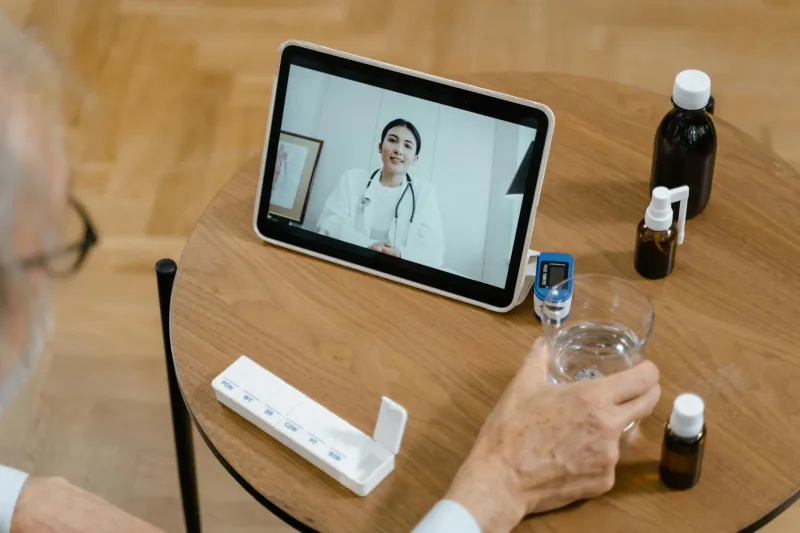
Technology might also help recreate some aspects of the family doctor relationship. Telemedicine platforms can provide easier access to consistent providers, while AI systems could help doctors remember important details about patients' lives and health histories.
The Human Cost of Efficiency
The shift from family doctors to fragmented care reflects broader changes in American society—our mobility, our relationship with institutions, our prioritization of efficiency over relationships. We gained access to cutting-edge specialists and 24/7 urgent care, but we lost something harder to quantify: the comfort of being truly known by the person responsible for our health.
Perhaps most tellingly, when people describe their ideal healthcare experience, they often sound like they're describing the family doctor model of the past: a physician who knows them, listens to them, and coordinates all aspects of their care. We may have gained medical sophistication, but we're still searching for what we left behind.