One Number Used to Be Enough. Now Your Body Has a Dashboard.
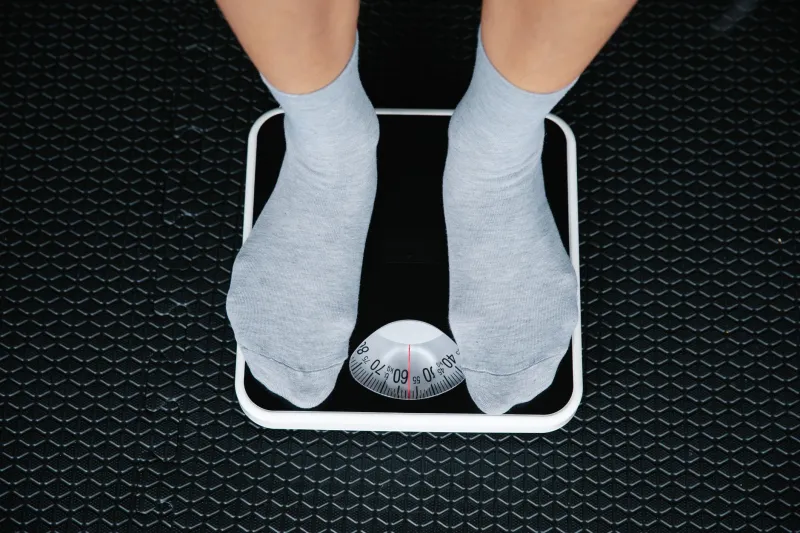
There was a time when stepping on a scale was a pretty uneventful thing. You'd stand on the doctor's office scale — the kind with the sliding metal weights — a nurse would write a number in your chart, and that was the entire conversation. Nobody handed you a breakdown. Nobody compared your fat-to-muscle ratio. The number either concerned your doctor or it didn't, and life moved on.
That world feels almost quaint now.
Today, a mid-range bathroom scale doesn't just weigh you. It calculates your body fat percentage, estimates your visceral fat level, guesses at your bone density, assigns you a "metabolic age," and syncs all of it to an app that graphs your trends over time. You can step on the same scale twice in thirty minutes and get meaningfully different readings. You can be told simultaneously that you're at a healthy weight but have too much visceral fat. You can be fit by one measure and borderline by another. The data is everywhere, and somehow it never quite resolves into clarity.
How did we get from one number to twelve?
The Scale Was Once a Symbol of Progress
In the early twentieth century, public weighing scales were literally a novelty attraction. Penny scales appeared in drugstores, train stations, and amusement parks across America — you'd drop a coin, get your weight printed on a card, and feel like you'd done something mildly scientific. The bathroom scale didn't become a household fixture until the 1940s and 1950s, when middle-class Americans started buying them as domestic appliances.
Even then, the cultural message was relatively simple: the scale told you if you'd gained or lost weight. Doctors used it alongside height to make rough assessments. There was no algorithm. There was no score. There was a number, and a doctor who either raised an eyebrow or didn't.
The idea that weight needed to be contextualized with other measurements was barely part of the conversation.
Enter BMI — Invented by a Mathematician Who Never Intended It for You
Here's the part of the story that tends to surprise people: the Body Mass Index, the metric that now appears on medical charts, insurance forms, and school health screenings across the country, was not invented by a doctor. It wasn't designed to assess individual health at all.
Adolphe Quetelet was a Belgian mathematician working in the 1830s who wanted to describe the statistical distribution of human bodies across large populations. He developed what he called the Quetelet Index — weight divided by height squared — as a way to study averages across groups, not to diagnose individuals. He was essentially doing social statistics.
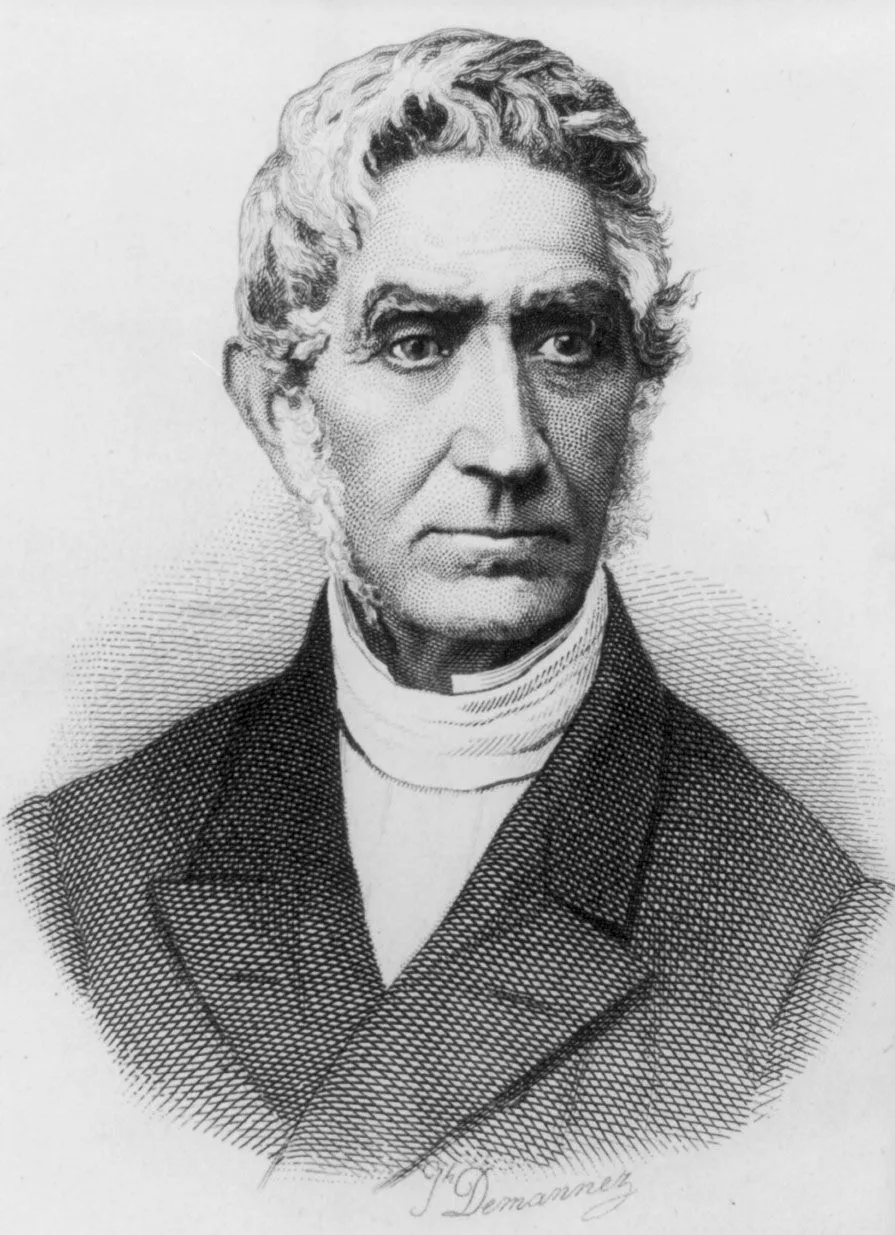 Photo: Adolphe Quetelet, via cdn.britannica.com
The index sat largely in academic obscurity for over a century. Then, in the 1970s, an American physiologist named Ancel Keys — already famous for his work on dietary fat and heart disease — published research arguing that Quetelet's formula was the most practical tool for comparing body fatness across populations. He renamed it the Body Mass Index. By the 1980s, health agencies were adopting it. By the 1990s, it was standard.
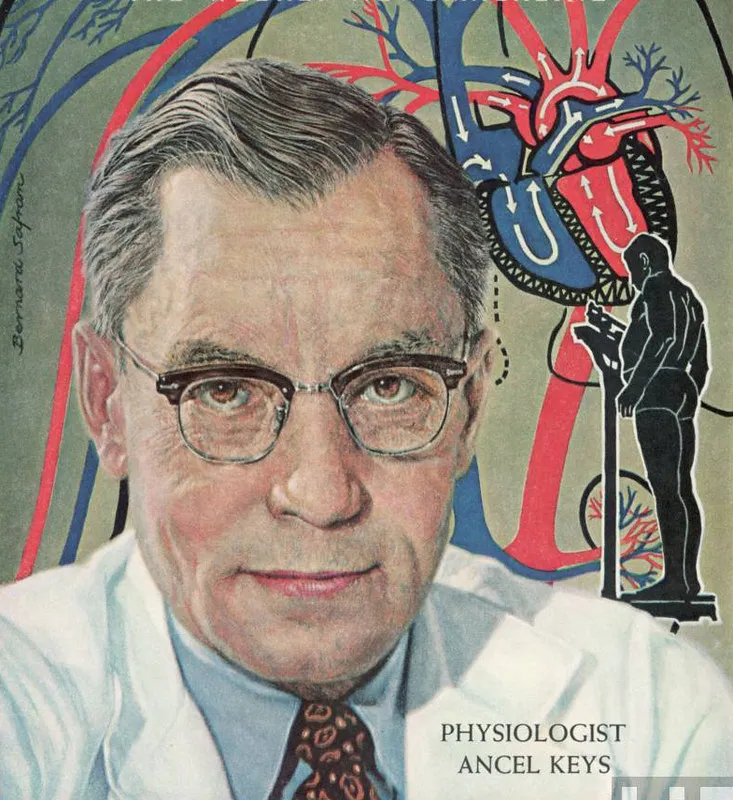 Photo: Ancel Keys, via alternative-doctor.com
The critical catch: Keys himself acknowledged the index was designed for population-level analysis, not individual assessment. A mathematician studying 19th-century Belgian census data had, almost accidentally, become the foundation of modern weight medicine.
The Cutoffs Were Redrawn Overnight
If the origins of BMI feel a little shaky, the story of how its thresholds were set doesn't help. In 1998, the National Institutes of Health revised the American BMI cutoffs, dropping the "overweight" threshold from a BMI of 27 to 25. The change was aligned with World Health Organization guidelines, and it was made without new underlying research dramatically shifting the science.
 Photo: National Institutes of Health, via hsph.harvard.edu
The result? An estimated 29 million Americans went to bed at a healthy weight and woke up overweight — without gaining a single pound. Overnight, the country's obesity statistics looked considerably worse, not because Americans had changed, but because the measuring stick had.
This is the part that gets lost when we talk about the "obesity epidemic" as if it's a purely biological phenomenon. Some of it is. But some of it is the product of where we decided to draw lines on a chart.
The Smart Scale Era and the Anxiety Multiplier
Fast forward to the present, and the measurement landscape has exploded. Consumer smart scales now measure body fat percentage using bioelectrical impedance — sending a small electrical current through your body and estimating tissue composition based on resistance. The technology is real. The precision, however, is genuinely questionable. Hydration levels, time of day, recent exercise, and even what you ate the night before can swing readings by several percentage points.
And yet these numbers are presented with the clean authority of a digital display. They feel precise because they look precise.
Beyond the scale, wearables now track resting heart rate, heart rate variability, sleep stages, blood oxygen levels, and stress scores. Continuous glucose monitors — once reserved for diabetics — are being marketed to healthy people curious about their metabolic response to a sandwich. The quantified self movement has turned everyday bodies into data-generating machines.
None of this is inherently bad. Some of it is genuinely useful, particularly for people managing chronic conditions. But there's a growing body of research suggesting that constant self-monitoring, particularly of weight and body composition, correlates with increased anxiety and disordered eating behaviors rather than improved health outcomes. More data doesn't automatically produce more clarity. Sometimes it produces more noise.
What Actually Matters
The irony is that the health markers most strongly associated with long-term outcomes — blood pressure, blood glucose, cholesterol levels, cardiovascular fitness, and yes, general body weight — are largely the same ones that mid-century doctors were tracking with much simpler tools. The fundamentals haven't changed as dramatically as the measurement industry suggests.
What has changed is the cultural pressure to monitor, optimize, and quantify. The scale used to be a passive object in a corner of the bathroom. Now it's a portal to a dashboard that updates daily and invites comparison, concern, and endless interpretation.
Your great-grandmother probably weighed herself once a week if she weighed herself at all. She almost certainly didn't know her visceral fat score. And depending on who you ask, she may have had a healthier relationship with her body because of it.
Sometimes the most useful thing a number can do is stay simple enough to ignore.