Death Used to Happen on Tuesday, Burial on Thursday. Now It's a Two-Week Production.
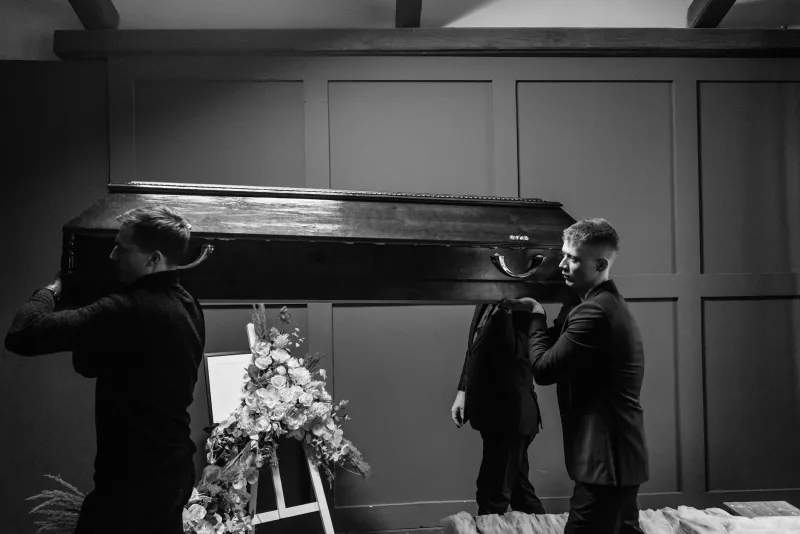
When Death Moved at the Speed of Community
In 1950, when someone died in small-town America, the clock started ticking immediately. Not because of any morbid urgency, but because that's simply how communities handled death. The body went to the local funeral director within hours. Relatives were called by telephone or telegram. The service happened within two to three days, and everyone went back to their lives carrying the sharp, immediate weight of loss.
It wasn't ceremony that drove the timeline—it was practicality mixed with tradition. Most families had burial plots already secured, often in church graveyards or small community cemeteries. The local funeral director knew everyone in town and kept things simple. Flowers came from neighbors' gardens. The service followed familiar religious patterns that didn't require extensive planning.
The Modern Death Timeline: A Logistical Marathon
Today's average funeral takes 10 to 14 days to organize, and that timeline keeps stretching longer. What changed? Nearly everything about how Americans die and how we respond to death.
First, families are scattered across time zones. Coordinating travel for relatives flying in from Seattle, Miami, and Denver takes days of planning that didn't exist when everyone lived within 50 miles of each other. Airlines, hotels, and rental cars must be booked. Work schedules need coordination across multiple employers and industries.
Second, the funeral industry itself has become exponentially more complex. Where families once chose between a pine box and something slightly fancier, today's funeral homes present families with decisions about everything from casket materials to video tributes to catering options. Each choice requires research, comparison shopping, and family consensus among people who may rarely speak to each other.
The Paperwork Avalanche
Perhaps nothing illustrates the transformation more clearly than the administrative requirements. In the 1950s, a death certificate and a burial permit were often the extent of necessary paperwork. Today, families navigate Social Security notifications, insurance claims, pension transfers, digital account closures, and estate documentation that can take weeks to complete.
Modern Americans die owning more stuff and having more complex financial lives. Your grandfather might have had a savings account and a small pension. Today's deceased might have 401(k)s, IRAs, multiple insurance policies, property in different states, and dozens of online accounts that need to be identified and closed.
The Commercialization of Grief
The most significant shift is how death moved from a community event to a commercial transaction. In 1950, neighbors brought food, dug graves, and provided comfort through shared labor. Churches organized most services using volunteer coordination that happened naturally within existing social structures.
Today, grief has become a service industry. Families hire caterers, event planners, and grief counselors. They rent venues, order custom memorial items, and coordinate with multiple vendors who each have their own schedules and requirements. What once happened through informal community networks now requires contracts, deposits, and professional coordination.
What the Delay Does to Grieving
This extended timeline fundamentally changes how Americans experience loss. The immediate, sharp grief of quick burial has been replaced by weeks of administrative stress mixed with anticipatory anxiety about the upcoming service.
Families report feeling like they can't properly grieve until after the funeral, but the funeral keeps getting pushed further into the future. The result is a strange suspended animation where normal life continues while death remains unresolved. Children return to school, spouses go back to work, but the emotional conclusion keeps receding.
Psychologists note that this delay can complicate the grieving process. The quick burial model, for all its apparent harshness, provided immediate closure and community support when families needed it most. Today's extended process can leave people feeling isolated and overwhelmed by logistics when they're least equipped to handle complex decisions.
The Economics Behind the Timeline
The funeral industry has economic incentives to extend timelines. More planning time often means more expensive services. Families making decisions under time pressure in the 1950s chose simpler options. Families with two weeks to plan often end up spending significantly more on services, flowers, catering, and memorial products.
Funeral homes have also consolidated into larger businesses that serve wider geographic areas. The local funeral director who knew your family has been replaced by corporate operations that treat each death as a separate project requiring full consultation and planning processes.
What We Lost in Translation
The swift burial model wasn't perfect—it sometimes prevented distant relatives from attending and gave families little time to process their loss. But it provided something modern funerals often lack: immediate community response and clear closure.
When death happened quickly, communities rallied immediately. Neighbors organized food, childcare, and practical support without being asked. The shared experience of rapid burial created collective grieving that helped families feel supported rather than isolated.
Today's extended timeline often means that initial community support fades before the funeral even happens. People offer help in the first few days, but maintaining that support for two weeks proves difficult for everyone involved.
The Return to Simplicity
Some families are pushing back against the extended timeline by choosing direct burial or immediate cremation followed by memorial services planned at their own pace. These approaches separate the practical necessity of body disposition from the emotional work of community grieving.
Others are reviving elements of the older model: choosing simple services, limiting vendor involvement, and focusing on immediate family and close friends rather than elaborate productions designed to accommodate distant relatives and complex logistics.
The shift from three days to two weeks reveals how death, like so many aspects of American life, has become more complex, more expensive, and more disconnected from the communities that once provided natural support systems. Whether that complexity serves grieving families better than the old model remains an open question for each family navigating loss in modern America.