The Death of the Scratch Kitchen: How Three Generations of Americans Forgot How to Cook — Then Tried to Remember
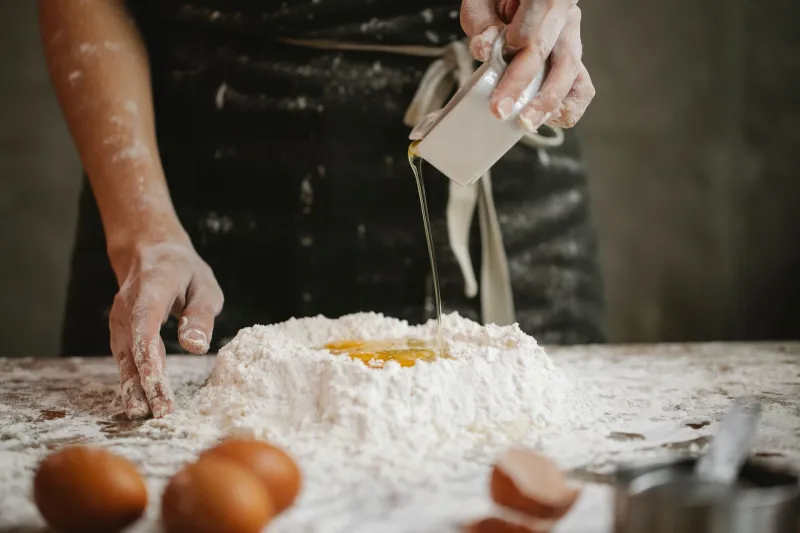
In 1935, an American housewife in rural Ohio started her day before dawn. By 6 a.m. she had biscuits in the oven, salt pork frying in a cast-iron pan, and dried beans soaking for that night's dinner. She did this not because she was particularly domestic or passionate about food. She did it because there was no other way to eat.
In 2024, her great-granddaughter in Columbus gets a notification that her HelloFresh box has been delivered. She scans the recipe card, follows six illustrated steps, and produces a credible chicken marsala in 35 minutes. She tells her friends she's really gotten into cooking lately.
Both statements are true. They're also describing almost completely different activities.
When Cooking Was Just Called Surviving
Before the postwar processed food revolution, American home cooking wasn't a hobby, a wellness practice, or a personality trait. It was infrastructure. Feeding a family required daily labor — sourcing ingredients, preserving what couldn't be used immediately, and executing techniques that took years to develop properly.
Women in the early 20th century spent an estimated four to five hours a day on food-related tasks. That included everything from baking bread to putting up preserves to rendering lard to keeping a perpetual stock pot going on the back of the stove. Recipes were passed down orally or through handwritten notes because the assumption was that you learned by watching, not by reading.
The pantry in a 1920s American home wasn't full of convenience products. It was full of raw materials: flour in 25-pound sacks, dried legumes, salt-cured meats, root vegetables in the cellar, eggs from the backyard, and whatever had been canned from last summer's garden. Cooking wasn't a skill you developed. It was a skill you were born into, absorbed through years of standing next to someone who already knew how.
The Can Opener That Changed Everything
World War II accelerated a shift that had been building since the late 1800s, when commercial canning first made shelf-stable food available to ordinary Americans. The war years normalized processed food in ways that stuck. Soldiers ate from cans. Factories producing for the military retooled for civilian markets when peace came. And the postwar economic boom gave American families something they'd never really had before: disposable income and a cultural appetite for the new.
 Photo: World War II, via cdn.britannica.com
The 1950s were the golden age of processed food marketing, and the industry played it brilliantly. Campbell's Soup. Kraft Dinner. Birds Eye frozen vegetables. Swanson TV dinners, introduced in 1953 and perfectly timed for the television era. These products weren't just sold as convenient. They were sold as modern — as evidence that American ingenuity had liberated women from the drudgery of the kitchen.
The messaging worked. Within a single generation, the definition of cooking shifted. Opening a can of condensed soup and adding it to a casserole became a recipe. Heating a frozen dinner became making dinner. The scratch skills that had been assumed knowledge for centuries started to erode because they simply weren't being practiced or passed down at the same rate.
The Microwave and the Meal Kit: Two Different Promises
The microwave oven, which became a mainstream American kitchen appliance through the 1970s and 80s, completed what the TV dinner started. Now even the heating process could be accelerated. The average time Americans spent on food preparation dropped steadily through the latter half of the 20th century. By the 1990s, food industry research showed that the majority of American households wanted dinner on the table in under 30 minutes on weeknights. The industry was happy to oblige.
Fast food expanded to fill every gap. Prepared foods at grocery stores multiplied. Delivery evolved from pizza into every conceivable cuisine available via app. The food industry got extraordinarily good at solving the problem of feeding people who didn't know how — or didn't want — to cook.
And then something unexpected happened.
Millennials, the first generation raised almost entirely on convenience food, started buying cast iron skillets in enormous numbers. Sourdough starter became a cultural moment during the pandemic. Cooking YouTube channels racked up hundreds of millions of views. A generation that had grown up eating Lunchables and Lean Cuisines began treating scratch cooking as an aspiration — a skill to acquire rather than one absorbed from childhood.
The meal kit industry, which crossed $5 billion in annual revenue in the US, positioned itself perfectly at that intersection: offering the experience of cooking from scratch without requiring the foundational knowledge that scratch cooking historically assumed you already had. Every ingredient pre-measured. Every technique explained. The recipe card as a tutorial rather than a reminder.
What Got Lost — and What's Being Rebuilt
The shift matters beyond nostalgia. Nutritional research consistently shows that home-cooked meals — particularly those made from minimally processed whole ingredients — correlate with better health outcomes, lower sodium intake, and healthier body weight across populations. The ultra-processed food that filled the gap left by scratch cooking has been linked to everything from obesity to gut health issues to increased cardiovascular risk.
The irony is sharp: the food industry sold convenience as progress, and in some ways it was. But the nutritional trade-offs took decades to fully surface, and by the time the research caught up, multiple generations had already lost the practical skills to cook differently even if they wanted to.
Home economics classes, once a staple of American middle and high schools, were gutted through the 1980s and 90s as curricula shifted toward academic subjects. The assumption was that cooking would be learned at home. By then, many homes had stopped teaching it.
The revival happening now — the cooking classes, the fermentation kits, the TikTok bread bakers — is real and genuinely interesting. But it's also revealing. When your great-grandmother made biscuits from scratch at 5 a.m., she wasn't expressing a lifestyle. She was just making breakfast. The fact that doing the same thing today feels like an accomplishment says everything about how far the baseline has moved.