Pain Used to Be Part of the Deal. Then Women Started Negotiating.
If you ask women who gave birth in the 1950s and 1960s what labor was like, a pattern emerges pretty quickly in their descriptions. Not just the pain — though there's plenty of that — but the passivity. Things happened to them. Doctors made decisions. Nurses managed the room. The woman in labor was, in many accounts, more patient than participant.
"You just got through it" is a phrase that comes up again and again.
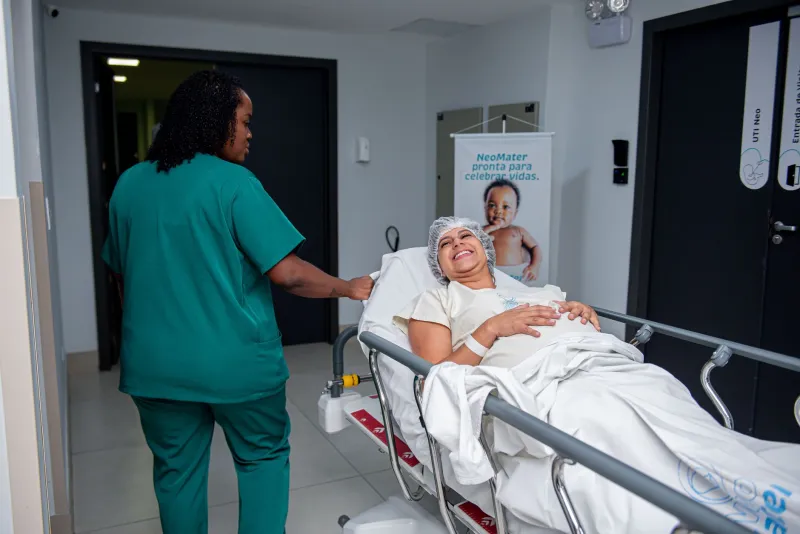
That sentence would be almost incomprehensible to a significant portion of women walking into a hospital labor and delivery unit today — armed with a printed birth plan, a doula, a playlist, and a clear conversation already scheduled with their OB about when to request the epidural.
The transformation between those two experiences is one of the more dramatic shifts in American medicine over the last seventy years. And it wasn't just about pain relief. It was about power.
What Women Were Actually Given
Before the epidural became standard, the history of obstetric pain management in America is, to put it charitably, uneven.
In the early twentieth century, a method called "twilight sleep" became fashionable among wealthier American women — a combination of morphine and scopolamine that didn't actually eliminate pain but caused amnesia, so women wouldn't remember the experience. The marketing was remarkable: you'd suffer, but you wouldn't know it afterward. This was presented as a gift.
Twilight sleep fell out of favor by mid-century, partly because of safety concerns and partly because women were left so disoriented they couldn't hold their newborns. What replaced it was often a combination of general anesthesia for complicated deliveries and simple endurance for straightforward ones. Ether was used. Spinal blocks were used for cesareans. For vaginal births, the expectation was frequently that women would manage with limited intervention.
The emotional framing around this wasn't subtle. Pain in labor was often described — including by some medical authorities — as natural, appropriate, and even beneficial. There was a cultural script that connected suffering in childbirth to proper motherhood. Women who asked for too much pain relief risked being seen as weak, or worse, as putting their own comfort ahead of their baby's welfare.
The Epidural's Long Road to the Mainstream
Epidural anesthesia as a technique has existed in various forms since the early twentieth century, but it didn't become widely used in American obstetrics until the 1970s and 1980s. Even then, adoption was slow and uneven. Some hospitals embraced it; others remained skeptical. Many anesthesiologists weren't yet trained in obstetric epidurals. And the cultural resistance — the idea that women should simply endure — didn't evaporate overnight.
What changed the picture most dramatically was a combination of factors converging through the late 1980s and 1990s: improved technique that made epidurals safer and more controllable, better-trained anesthesiology departments in hospitals, and — critically — a shifting cultural conversation about women's bodily autonomy.
The feminist movements of the 1970s had already begun challenging the paternalism embedded in obstetric medicine. The natural childbirth movement, led in part by figures like Fernand Lamaze and Grantly Dick-Read, had paradoxically also pushed the conversation forward by making birth something women actively participated in rather than simply survived. Even if some natural childbirth advocates were skeptical of epidurals, they helped establish a principle that turned out to matter enormously: women had opinions about their own labor, and those opinions deserved consideration.
 Photo: Grantly Dick-Read, via www.wydawnictwocentrum.pl
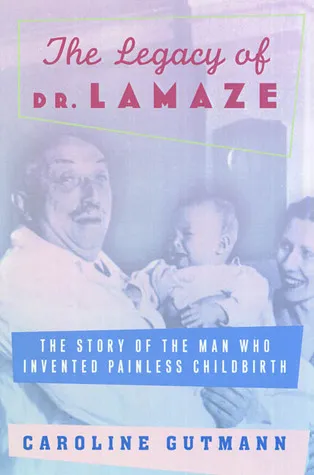 Photo: Fernand Lamaze, via images-na.ssl-images-amazon.com
By the mid-1990s, epidural rates in the US were climbing steadily. Today they exceed 70 percent among women delivering vaginally in hospitals — making epidural analgesia one of the most widely used medical procedures in the country.
The Birth Plan as a Cultural Artifact
The birth plan — a written document outlining a laboring woman's preferences for pain management, positioning, intervention, lighting, music, who's in the room, and sometimes even what language the medical team uses — would have been genuinely baffling to a 1960s obstetrician.
Not because the preferences themselves are strange, but because the premise would have been unfamiliar: that the patient is a decision-maker whose wishes structure the clinical encounter, rather than a body the medical team manages according to their own judgment.
This shift is real, significant, and not entirely without complications. Some obstetricians and nurses report friction when birth plans don't account for how quickly labor can change clinically. The gap between a carefully planned birth experience and an emergency situation can be jarring. And there's an equity dimension that often gets overlooked in the conversation: the highly negotiated, birth-plan-driven labor experience is predominantly a feature of middle-class and upper-middle-class hospital births. Women without consistent prenatal care, without doulas, without the cultural capital to advocate clearly in a medical setting — their experience of the delivery room remains considerably closer to the older model.
What the Epidural Actually Changed
Beyond the obvious relief from pain, the widespread epidural changed the texture of the birth experience in ways that ripple outward. Women are more alert during labor and delivery. Partners and support people can be meaningfully present rather than managing a woman in acute distress. Recovery conversations — about what happened, what decisions were made, what comes next — can happen while the birth is still fresh.
It also changed the timeline. Because epidurals can slow labor in some cases, they're connected to broader patterns around labor augmentation with drugs like Pitocin, and to cesarean section rates, though the relationship between epidurals and C-sections is genuinely contested in the medical literature.
What's not contested is the basic shift in who the delivery room belongs to.
For most of American history, it belonged to the medical team. The woman in labor was the reason everyone was there, but she wasn't exactly running the meeting.
That's changed. Not perfectly, not equitably, and not without new tensions of its own. But the woman who walks into a hospital today expecting to have a say in her own labor experience isn't asking for something radical.
She's just expecting something her grandmother never got to want.