When Dinner Bells Ruled the Neighborhood
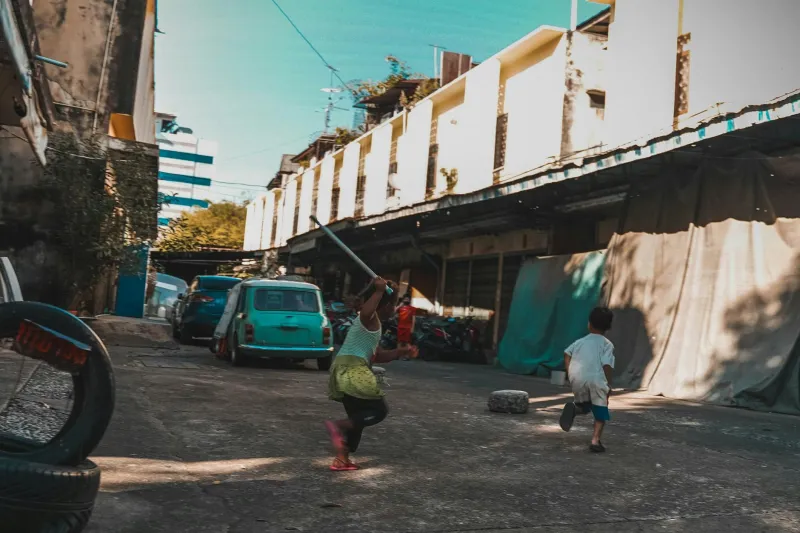
In 1975, the sound of a mother calling "Time for dinner!" from a front porch could summon children from a six-block radius. Kids as young as five roamed neighborhoods freely, building forts in vacant lots, riding bikes to friends' houses across town, and settling playground disputes without adult mediation. The only rule was simple: be home when the streetlights came on.
This wasn't neglect—it was childhood. Parents expected kids to entertain themselves, explore their surroundings, and develop independence through unsupervised play. The neighborhood was considered safe territory, and children were trusted to navigate it responsibly.
According to research by sociologist Peter Gray, children in the 1970s spent an average of three to four hours daily in unstructured, unsupervised outdoor play. They walked or biked to school starting around age six, often traveling more than a mile each way without adult escort. Summer days stretched endlessly, filled with pickup baseball games, creek exploration, and adventures that began at breakfast and ended at dusk.
The Architecture of Independence
The physical environment supported this freedom. Neighborhoods were designed for walking, with sidewalks connecting residential areas to schools, parks, and shopping districts. Front porches and large windows allowed parents to keep casual watch over children without hovering. Vacant lots and undeveloped spaces provided natural playgrounds where kids could build, dig, and imagine without adult supervision.
Playground equipment reflected this hands-off approach. Metal slides that burned bare legs in summer sun, merry-go-rounds that spun fast enough to launch riders, and monkey bars positioned over hard-packed dirt rather than soft mulch. The equipment was designed for challenge and adventure, not safety and liability protection.
"We had this amazing sense of ownership over our neighborhood," remembers Sarah Williams, who grew up in suburban Detroit during the 1970s. "We knew every shortcut, every good climbing tree, every house where you could retrieve a ball without getting yelled at. It was our territory, and we were the experts."
Children developed sophisticated social systems without adult intervention. They created elaborate games with complex rules, formed shifting alliances and friendships, and learned to negotiate conflicts through trial and error. The playground hierarchy was established and maintained by kids themselves, creating real-world lessons in leadership, cooperation, and resilience.
The Panic That Changed Everything
The transformation of American childhood didn't happen overnight—it began with a series of high-profile child abduction cases that captured national attention during the 1980s. The disappearance of Etan Patz in 1979, followed by Adam Walsh in 1981, created a media narrative that suggested predators lurked around every corner.
 Photo: Adam Walsh, via www.collegenetworth.com
 Photo: Etan Patz, via www.crimemuseum.org
Statistically, these cases represented tragic but extremely rare events. The likelihood of a child being abducted by a stranger was—and remains—roughly equivalent to being struck by lightning. But the emotional impact far exceeded the actual risk, especially as 24-hour news cycles amplified every missing child story into a national crisis.
"Stranger danger" became a cultural obsession. Schools began teaching children to fear unknown adults rather than trust community members. Parents who had once sent kids to the store alone now worried about letting them play in their own front yards. The phrase "Have you seen my child?" appeared on milk cartons, transforming breakfast into a daily reminder of parental anxiety.
This shift coincided with other cultural changes that reduced children's independence. The decline of single-income families meant fewer parents were home during the day to provide casual neighborhood supervision. Rising divorce rates and geographic mobility weakened extended family networks that had traditionally shared childcare responsibilities.
The Structured Childhood Revolution
As unstructured play became viewed as dangerous, organized activities filled the void. Youth sports evolved from pickup games to year-round competitive leagues requiring significant parental involvement. Music lessons, tutoring, and academic enrichment programs consumed hours once devoted to free play.
The scheduling of childhood accelerated through the 1990s and 2000s. Middle-class families began treating children's time as a resource to be optimized rather than enjoyed. Playdates replaced spontaneous friendships. Organized activities replaced neighborhood exploration. Adult supervision became constant rather than occasional.
Modern parents spend roughly three times as many hours per week actively engaged with their children compared to parents in the 1970s, according to research by economist Valerie Ramey. This increased attention isn't necessarily beneficial—much of it involves driving children between activities and monitoring their behavior rather than allowing independent development.
The Liability Culture
Legal and insurance concerns accelerated the restriction of childhood freedom. Schools eliminated recess equipment that posed injury risks. Playgrounds were redesigned to minimize liability, with soft surfaces, rounded edges, and height restrictions that prioritized safety over challenge.
Municipal governments began requiring adult supervision for activities that children had previously organized themselves. Many communities now prohibit children under 12 from being alone in public spaces, effectively criminalizing the independent play that was once considered normal childhood development.
Parents face legal consequences for allowing children the freedom that was standard a generation ago. Several states have investigated parents for "neglect" when children walk to school alone or play in neighborhood parks without adult supervision. The threat of Child Protective Services involvement has made many parents reluctant to allow any unsupervised activity.
The Mental Health Consequences
The results of America's childhood freedom restrictions are becoming clear through rising rates of anxiety and depression among young people. Children who grow up with constant supervision often struggle to develop independence, risk assessment skills, and emotional resilience.
Research by psychologist Peter Gray links the decline in free play to increased rates of childhood anxiety disorders, depression, and attention problems. When children don't have opportunities to face and overcome challenges independently, they may develop learned helplessness rather than confidence in their own abilities.
Modern college counseling centers report unprecedented demand for mental health services, with students seeking help for problems their parents' generation typically resolved through peer interaction and trial-and-error learning. The generation raised under constant supervision often struggles with decision-making, conflict resolution, and stress management when they finally gain independence.
The Physical Price
The restriction of outdoor play has contributed to rising childhood obesity rates and declining physical fitness. When children's primary exercise comes from organized sports rather than daily neighborhood exploration, many kids get less overall physical activity despite participating in more structured programs.
Vision problems have increased as children spend more time indoors and less time looking at distant objects. Sleep disorders have risen as children have fewer opportunities for the physical exhaustion that naturally regulates circadian rhythms. The health benefits of unstructured outdoor play—sun exposure, fresh air, varied physical challenges—have been largely eliminated from many children's daily experiences.
The Slow Return of Common Sense
Some communities are beginning to recognize the costs of over-protecting children. "Free-range parenting" movements advocate for returning reasonable independence to childhood. Several states have passed laws protecting parents who allow age-appropriate unsupervised activities.
Schools are experimenting with "adventure playgrounds" that prioritize challenge over safety, allowing children to use tools, build structures, and take reasonable risks under minimal supervision. These programs often see dramatic improvements in children's confidence, creativity, and social skills.
But the infrastructure supporting independent childhood has largely disappeared. Sidewalks end abruptly. Vacant lots have been developed. The network of adults who once provided informal community supervision—shopkeepers, crossing guards, neighbors—has weakened as social connections have declined.
Rediscovering Balance
The challenge for modern parents is finding balance between reasonable safety precautions and the independence children need to develop resilience and confidence. This means accepting that some risk is necessary for healthy development, and that the greatest danger to children may not be stranger abduction but the anxiety and helplessness that result from overprotection.
The generation that grew up with streetlight curfews developed skills that can't be taught in structured environments: the ability to read social situations, negotiate with peers, assess physical risks, and find creative solutions to unexpected problems. These capabilities emerge through practice, not instruction—and practice requires the freedom to make mistakes without immediate adult intervention.
America's shift from trusting children with independence to viewing childhood freedom as dangerous reflects broader cultural anxieties about risk, control, and responsibility. We've prioritized safety over development, organization over discovery, and supervision over self-reliance. The question now is whether we can find our way back to a more balanced approach that prepares children for independence rather than protecting them from it.