When Death Came Home: How America Moved from Backyard Burials to Funeral Parlor Monopolies
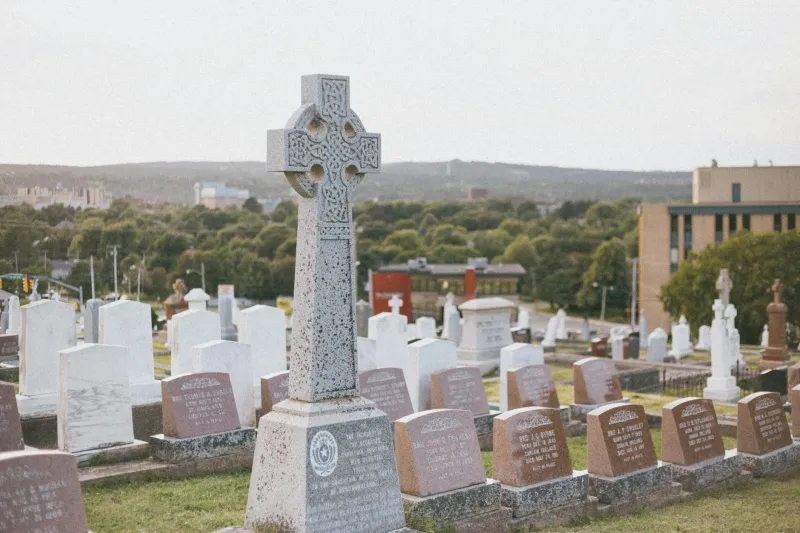
Walk through any small American town today, and you'll notice something peculiar about the oldest houses: many have small fenced areas in the backyard that look suspiciously like tiny cemeteries. That's because they often are.
For most of American history, when someone died, the family dug a hole in the backyard, said some words, and got on with life. No funeral director, no embalming fluid, no $8,000 casket made from "hand-selected hardwood." Death was as much a part of home life as birth, cooking, or sleeping.
The Backyard Cemetery Era
In 1850, if your grandfather passed away in rural Ohio, here's what happened: the women of the family washed and dressed the body, the men built a simple wooden box, and everyone gathered in the parlor for a viewing. Then they walked to the family plot—often just a corner of the farm—and buried him next to great-grandmother and the baby who didn't make it through winter.
No permits. No funeral home. No bill for thousands of dollars.
This wasn't considered primitive or disrespectful. It was normal. Even in cities, families often buried loved ones in small community plots managed by churches or neighborhood associations. Professional undertakers existed, but mainly for the wealthy or in cases where families couldn't handle arrangements themselves.
How the Funeral Industry Changed Everything
The transformation began during the Civil War, when the need to transport soldiers' bodies home led to advances in embalming. Suddenly, there was a way to preserve bodies for longer periods, and entrepreneurs saw opportunity.
By the 1920s, funeral directors had organized into powerful trade associations. They began lobbying state governments to create regulations that, coincidentally, made home burial increasingly difficult. Zoning laws appeared that prohibited burials in residential areas. Health departments started requiring permits and inspections. Professional embalming became "recommended," then required in many situations.
The messaging was subtle but effective: only trained professionals could handle death safely and respectfully. Families who buried their own were portrayed as backwards, unsanitary, even dangerous to public health.
The Cultural Shift
By the 1950s, death had moved from the family parlor to the funeral parlor. Americans began to believe that handling their own dead was not just difficult, but somehow wrong. The funeral industry had successfully convinced the public that professional services weren't just convenient—they were necessary.
Marketing materials from the era are revealing. One funeral directors' trade publication from 1962 advised members to emphasize the "dignity" and "peace of mind" that only professional services could provide. The implication was clear: families who didn't use funeral homes were failing their loved ones.
The Numbers Tell the Story
In 1900, the average American funeral cost about $50 (roughly $1,800 in today's money). Today, the median funeral costs over $9,000, not including burial plot, headstone, or other extras that can push the total above $15,000.
Meanwhile, the funeral industry has consolidated dramatically. What were once family-owned funeral homes in every neighborhood are now largely controlled by two major corporations: Service Corporation International and Dignity Memorial, which together own thousands of funeral homes across the country.
The Surprising Legal Reality
Here's what most Americans don't know: home burial is still legal in most states. Only a handful of states—including Connecticut, Indiana, and New York—prohibit it entirely. In most places, you can legally bury a family member on your own property, provided you follow basic guidelines about depth, distance from water sources, and local zoning rules.
Yet virtually no one does it. The funeral industry's century-long campaign to position itself as the only legitimate option has been so successful that most Americans can't imagine any alternative.
The Quiet Rebellion
A small but growing movement of families is rediscovering home burial. They're motivated partly by cost—avoiding funeral home fees can save thousands—but more often by a desire to reclaim death as a family experience rather than a commercial transaction.
Sarah Chen of Portland, Oregon, buried her father on the family's rural property in 2019. "It felt like the most natural thing in the world," she says. "We dug the grave together, we lowered him down together, we filled it in together. It was hard work, but it was our work. No stranger in a suit was managing our grief."
The process required permits and inspections, but the total cost was under $500, compared to the $12,000 the local funeral home had quoted.
What We Lost Along the Way
The shift from home to funeral home burial represents more than just economic change—it's a fundamental alteration in how Americans experience death. When families handled their own burials, death remained integrated into daily life. Children saw it, participated in it, understood it as a natural transition.
Now death happens behind closed doors, managed by professionals, sanitized and packaged. We've gained convenience and, arguably, public health protections. But we've lost something harder to quantify: the sense that we can care for our loved ones from birth to burial without institutional intervention.
The funeral industry will tell you that professional services honor the dead and comfort the living in ways that families cannot achieve alone. Maybe that's true for some families. But for most of American history, families managed just fine with a backyard, a shovel, and each other.
The question isn't whether we should return to universal home burial. It's whether we should at least remember that we have a choice.