Your Grandmother Played Kickball on Day Three of Her Period. Nobody Made a Plan.
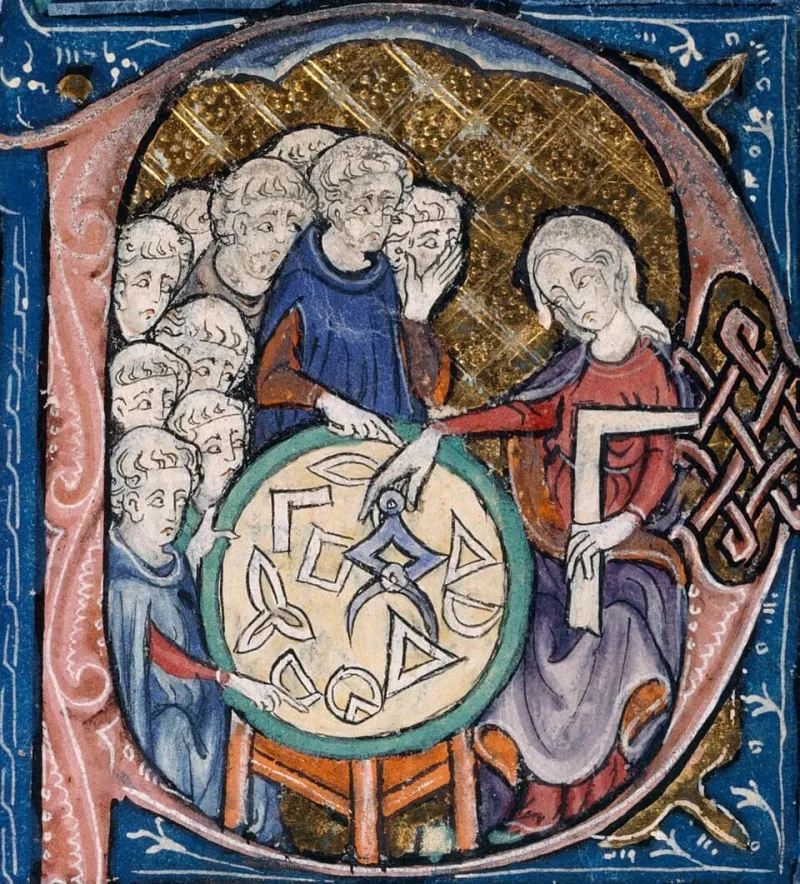
Photo: Attributed to Meliacin Master, Public domain, via Wikimedia Commons
Somewhere in a box in a lot of American attics, there are diaries from the 1950s and 60s with entries that mention cramps the way they'd mention rain — as weather. Something that happened, something you noted, something you moved through. There wasn't a protocol. There wasn't a tracking app. There was maybe a heating pad if you were lucky, and a Midol if someone had thought to buy it.
You went to school. You went to practice. You played kickball on the blacktop or sat through a double period of algebra, and you dealt with it, because the infrastructure for doing anything else didn't exist — and neither did the cultural permission.
That world is gone. And in its place is something genuinely more humane, more scientifically grounded, and — depending on your vantage point — possibly more complicated.
The Old Normal: Quiet Endurance
For most of the 20th century, menstruation was managed with a combination of basic products, over-the-counter pain relief, and silence. Tampons became widely available in the 1930s but carried social stigma for decades. Pads were bulky and limited. The pharmacological options were minimal. Hormonal birth control arrived in 1960, but it was positioned as contraception, not period management, and access was uneven for years.
What filled the gap was endurance. Girls learned early that periods were something to work around without making a fuss. Missing school or sports for cramps wasn't widely accepted. Complaining too loudly felt like weakness. The message, delivered in a hundred subtle ways, was that this was biology, not a medical event, and you managed biology on your own.
This produced a generation — several generations — of women who were extraordinarily good at pushing through. It also produced generations of women whose severe pain went unexamined, whose endometriosis went undiagnosed for a decade or more, and whose legitimate suffering was dismissed as dramatic.
The silence wasn't strength. A lot of it was just neglect.
What Changed, and When
The shift came gradually, then all at once. Research into premenstrual syndrome started gaining clinical legitimacy in the 1980s. PMDD — premenstrual dysphoric disorder — was formally recognized in the DSM in the 1990s. Hormonal contraceptives were increasingly prescribed not just for pregnancy prevention but for cycle regulation, pain reduction, and mood stabilization. By the 2000s, the FDA approved the first continuous birth control pill designed to eliminate periods almost entirely.
Period tracking moved from handwritten calendar marks to dedicated smartphone apps — Clue, Flo, and others — that analyze cycle data, predict symptoms, and generate health insights. Menstrual cups and period underwear offered new product categories. Advocacy around menstrual equity pushed the conversation into policy, with several states moving to eliminate sales tax on period products.
The cultural conversation opened up too. Periods went from something whispered about to something discussed openly in mainstream media, health journalism, and eventually advertising — a shift that was genuinely significant for the millions of people who'd been taught to be ashamed of their own biology.
The Medicalization Question
Here's where it gets complicated.
Medicalization is a term sociologists use to describe the process by which normal human experiences get reframed as medical conditions requiring clinical intervention. Childbirth. Aging. Sadness. And, increasingly, menstruation.
The argument isn't that period pain isn't real — it absolutely is, and conditions like endometriosis and PMDD cause genuine suffering that medicine was far too slow to take seriously. The argument is about where the line falls between treating illness and pathologizing biology.
When a pharmaceutical company markets a period-delay medication for beach vacations, that's a different conversation than treating debilitating cramps. When a tracking app suggests that a slightly irregular cycle might indicate a hormonal imbalance requiring investigation, it's nudging users toward clinical anxiety about variation that may be entirely normal. When the cultural narrative shifts from "periods are manageable" to "periods are a problem to be solved," something has changed in how we understand female bodies — and not entirely for the better.
Doctors who specialize in women's health have started pushing back gently on the idea that every cycle needs to be optimized. Some gynecologists note that the explosion of period tracking has produced a wave of patients convinced they have hormonal disorders based on app notifications — and that distinguishing real pathology from algorithmically generated anxiety has become part of the job.
What We Got Right
It would be easy — and wrong — to frame this as progress gone too far. The old model of silent endurance had real victims. Women with endometriosis waited an average of seven to ten years for a diagnosis for much of the late 20th century, partly because pain was normalized and dismissed. That diagnostic delay caused real damage — physical, psychological, and reproductive.
Having language for PMDD, having hormonal options for people whose periods genuinely interfere with their quality of life, having the cultural permission to say "this hurts and I need help" — these are meaningful gains. The medicalization critique doesn't cancel them out.
And the product innovation has been real too. The shift from the limited, often uncomfortable options of the mid-20th century to today's range of choices represents genuine improvement in how people can move through their cycles.
The Balance Nobody's Quite Found Yet
The honest answer is that American medicine — and American culture — hasn't finished working out where the line is. Between treating suffering and manufacturing it. Between giving women tools and selling them a problem. Between taking biology seriously and turning it into a dashboard of potential disorders.
Your grandmother probably had cramps nobody took seriously. That was wrong. But she also probably didn't spend the week before her period cross-referencing her mood data against a predictive algorithm. And there might be something worth keeping in that, even as we build something better.