Grandma's Recipe Card Didn't Have a Star Rating. It Didn't Need One.
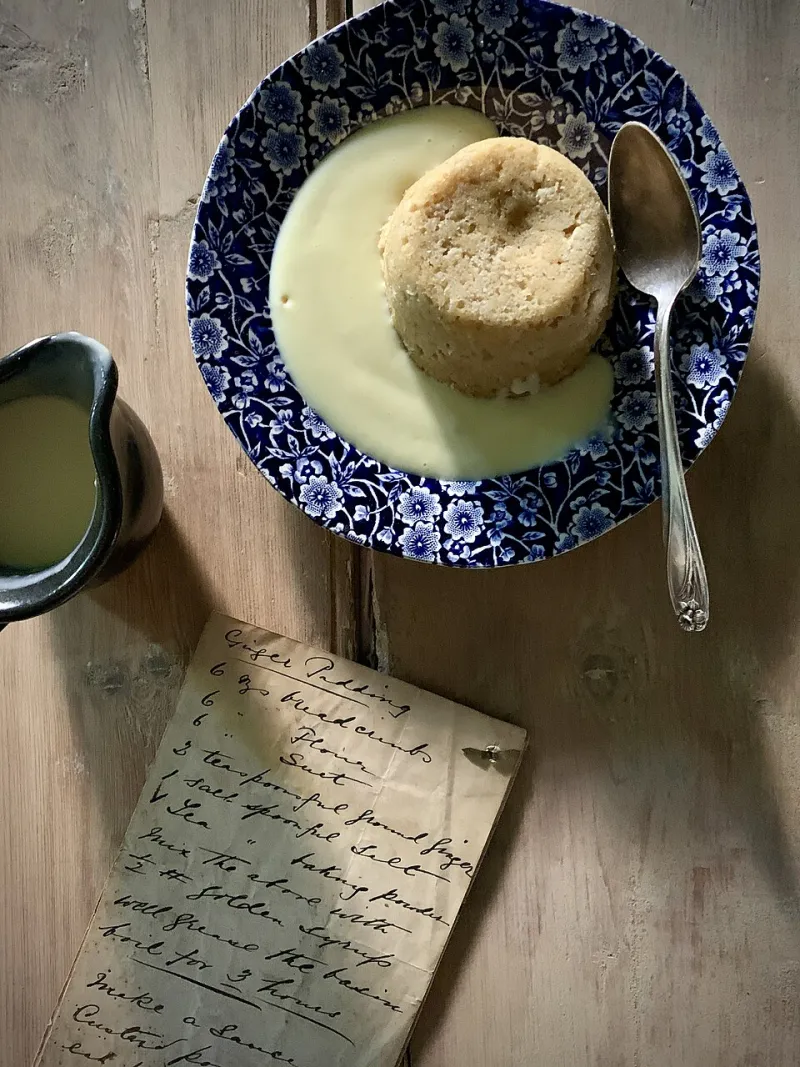
Photo: TheRegencyCook, CC BY-SA 4.0, via Wikimedia Commons
The card is faded at the edges, written in pencil with a couple of words crossed out and rewritten. The measurements are approximate. "A good handful of flour" doesn't translate to a standardized cup size. "Cook until it smells right" is not a temperature. And somewhere at the bottom, there's a grease stain that might be butter, might be vegetable oil, might be the ghost of a Sunday in 1963.
This is how cooking knowledge used to travel. Person to person. Kitchen to kitchen. With the fingerprints still on it.
Today, that same recipe exists in approximately 4,000 variations on the internet, each with a five-photo step-by-step guide, a comment section debating whether to use salted or unsalted butter, and a star rating that somehow averages to 4.7 out of 5. You can find it in thirty seconds. You can filter it by dietary restriction, prep time, and user rating. You can watch someone make it on a six-second video loop.
And yet a significant number of Americans still don't feel confident in the kitchen. Which raises a reasonable question: did infinite access make us better cooks, or just better at finding recipes?
The Oral Kitchen: How Cooking Knowledge Used to Move
For most of American history, cooking knowledge was hyperlocal and deeply personal. Recipes passed through families the way accents do — absorbed gradually, modified slightly with each generation, carrying the specific logic of a specific household.
You learned to cook by watching. By standing next to someone who'd done it a hundred times and absorbing the rhythm of it. You learned that pie dough needs to be handled gently not because a recipe told you, but because someone grabbed your wrist and said "not so hard." You learned that a good stock smells a certain way before it's ready, and no written description quite captures it.
Recipe cards existed, but they were supplementary. They were memory aids, not instruction manuals. The person reading them already had context — they'd seen the dish made, they knew the kitchen it came from, they understood what "season to taste" actually meant because they'd tasted it before.
Cookbooks were available, of course. The Joy of Cooking went through edition after edition. Betty Crocker was a fixture in American kitchens. But even these functioned differently than modern recipe resources — they were curated, finite, and designed to be read cover to cover as much as consulted for a single dish. They had a point of view. They made choices.
The Great Recipe Democratization
The internet changed all of it. Food blogs arrived in the early 2000s and exploded through the 2010s. YouTube turned cooking into a spectator sport. Pinterest became a visual archive of every dish anyone had ever thought about making. Then came Instagram, then TikTok, then AI-generated recipe tools that can produce a custom dish based on whatever's left in your refrigerator.
The scale of what's available now is genuinely staggering. The recipe website Allrecipes alone hosts more than 60,000 recipes. YouTube has millions of cooking videos. There are apps that use your pantry inventory to suggest meals, apps that learn your preferences and generate personalized weekly menus, apps that adapt recipes in real time based on substitutions.
This is, in many ways, remarkable. Regional American cooking traditions that might have died with a generation are documented online. Immigrant cuisines that used to require knowing someone from a specific community are now accessible to anyone curious enough to look. People with dietary restrictions that would have made cooking miserable in earlier decades can find workable alternatives in minutes.
The democratization of recipe knowledge is real, and it's done real good.
What Got Lost in the Algorithm
But here's the thing about a recipe with 4,000 variations and a comment section: it doesn't tell you which one to trust.
The old system was limited, but it had a built-in quality filter. The recipe your mother gave you had been made dozens of times. It had been adjusted. The version you received was the one that worked, refined through repetition in a real kitchen by someone who knew your tastes. The editorial work was already done.
Modern recipe discovery has the opposite problem. There's so much available, and so much of it is optimized for clicks and beautiful photography rather than kitchen performance, that the curation burden has shifted entirely to the cook. You have to evaluate sources, cross-reference reviews, figure out whose comment section to trust, and decide whether the person who left a one-star review was legitimately unhappy with the recipe or just used the wrong pan.
Cooking teachers and culinary educators have started talking about what they call "recipe dependency" — a pattern where home cooks follow instructions precisely but struggle to improvise, substitute, or troubleshoot, because they've never developed the underlying intuition that used to come from watching cooking happen rather than reading about it.
You can follow a recipe perfectly and still not understand why it works. And when something goes wrong — when the sauce breaks, when the bread doesn't rise — a recipe can't look you in the eye and tell you what happened.
The Nostalgia Trap and the Real Answer
None of this is an argument for going back. The old system worked well if you happened to be born into a family that cooked, in a tradition that translated to your life, with the time and circumstances to absorb it. A lot of people weren't. A lot of people grew up in households where nobody cooked, or where the cooking tradition didn't match the life they were building.
For those people, the recipe internet isn't a downgrade. It's an upgrade. It's access to knowledge that would have been genuinely out of reach a generation ago.
The real shift isn't that algorithms are bad and recipe cards were good. It's that we've changed what we expect cooking knowledge to do. We want it instant, searchable, and rated. We want it to eliminate uncertainty. And cooking — real cooking, the kind that becomes second nature — has always been built on sitting with uncertainty long enough to learn something.
The grease stain on your grandmother's recipe card wasn't a flaw. It was evidence. It meant someone had made that dish, in a real kitchen, enough times to wear the card out. That's a different kind of five-star rating. And it still means something.